How to Layer Gold Necklaces Without Tangling in 2026
Why do layered gold necklaces twist into one tight knot by lunchtime while the same combination looks effortless in a mirror? The problem usually comes from poor spacing, similar chain weights, loose clasps, or pendants that sit at the same point on the chest. A good stack is not just a pile of pretty chains. It is a small system with controlled length, movement, and visual weight.
The best starting point is three necklaces: a close-fitting chain, a mid-length pendant, and a longer chain with a different texture. That setup gives each piece its own space. You can then add 2026 trends such as sculptural links, mixed chain widths, and small symbolic pendants without turning your neckline into a knot.
Why do layered necklaces tangle in the first place?
Movement creates the knot
Necklaces tangle because they move at different speeds. Your skin, clothing, hair, and body heat all create friction. When two chains have a similar length, they repeatedly cross at the same area. Their clasps and pendants then catch on each other, tightening the loops with every step.
The issue becomes worse when you wear a chain under a high collar or over textured fabric. The necklace cannot slide freely, so it gathers in one place. Sweat and body lotion add another layer of friction. Even a smooth curb chain can twist when it sits directly beside a fine cable chain.
Equal lengths are the main design mistake
Two necklaces that differ by only 1 or 2 inches often occupy the same visual zone. They look crowded and behave badly. A better stack leaves at least 2 inches between the lowest point of one necklace and the lowest point of the next. This spacing gives each pendant room to swing without hitting the chain below it.
Verdict: Fix the spacing before buying more jewelry. A well-spaced two-piece stack will stay neater than a six-piece stack built from nearly identical lengths.
What necklace lengths work best for a tangle-free stack?

The cleanest layering formula uses distance, not quantity. Start with a short chain at 14 to 16 inches, add a second piece at 18 to 20 inches, and finish with a pendant or open chain at 22 to 24 inches. This creates three separate zones around the collarbone and upper chest.
| Layer | Suggested length | Best role | Why it works |
|---|---|---|---|
| First | 14–16 inches | Choker or fine chain | Frames the neckline and stays above lower pendants |
| Second | 18–20 inches | Small pendant or medium link | Creates a clear middle focal point |
| Third | 22–24 inches | Larger pendant or textured chain | Moves away from the first two chains |
| Fourth | 26 inches or longer | Optional long accent | Works only when the outfit has a simple neckline |
Use your neckline as a measuring tool
On a crew-neck T-shirt, keep the shortest chain just above the fabric edge and let the longest necklace finish below it. With a V-neck, match the longest pendant to the point of the V without allowing it to disappear inside the shirt. A square neckline suits a close 15-inch chain and a 20-inch pendant because the lines feel intentional.
Extenders solve more than one problem
An extender gives you several inches of adjustment and can rescue necklaces that otherwise sit too close together. Choose a 2-inch extender for small changes and a 3-inch extender when you want to move a pendant from collarbone level to the top of your chest. The best choice is a stack with adjustable lengths, not a fixed set that only works with one neckline.
Verdict: For most outfits, 16, 20, and 24 inches is the safest spacing pattern. Use a fourth necklace only when the chain textures and lengths remain clearly different.
How should you build a three-necklace stack?
Start with three layers, not five. Three pieces are enough to create depth, and they leave room for the necklaces to move. Add each layer in order, then test the stack while walking, turning your head, and sitting down. A combination that looks perfect while standing still can fail as soon as the chains shift against a shirt collar.
- Choose the base layer. Pick a fine 14- to 16-inch chain with no large pendant. A small bead, bar, or plain link is safer than a heavy charm because it will not drag the shortest necklace downward.
- Add one clear focal point. Select an 18- to 20-inch necklace with a pendant between 10 and 20 millimeters wide. Keep the pendant centered instead of adding several charms that can catch on nearby links.
- Make the third layer visibly different. Use a 22- to 24-inch chain with a paperclip, rope, snake, or mariner texture. Contrast gives the eye a break and reduces the chance that two chains will interlock.
- Check the clasps. Rotate the clasps toward the back of your neck before leaving home. If a clasp keeps sliding forward, add a small necklace separator or wear the heaviest piece as the lowest layer.
- Test the outfit. Move your arms, bend forward, and walk for two minutes. If two pendants touch repeatedly, adjust the length or replace one with a lighter piece.
Do not stack three necklaces that all have delicate cable chains, tiny round pendants, and the same yellow-gold finish. The result may look refined in a product photograph, but it has no visual hierarchy and plenty of opportunities to knot.
Which chain textures and pendants stay separated?
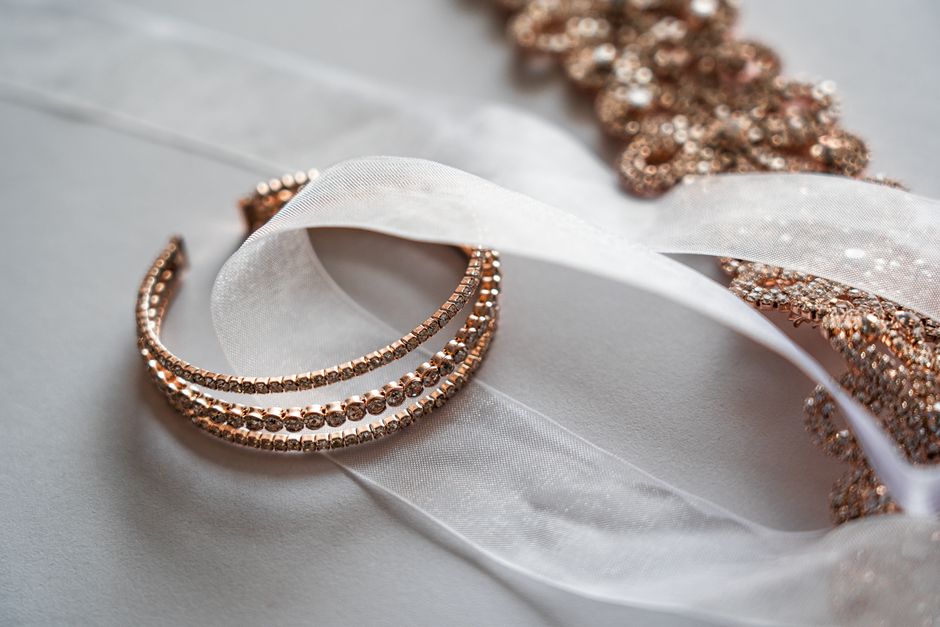
My strongest recommendation is to combine one smooth chain with one textured chain and one pendant necklace. Texture changes how the pieces reflect light, but it also makes the stack easier to read. Similar chains blur together and tend to occupy the same path across the neck.
Choose different shapes and weights
A fine cable chain works well as the top layer because it adds shine without pulling on the other necklaces. A paperclip or mariner chain makes a better lower layer because its larger links create a visible boundary. A rope chain can sit in the middle when you want a more traditional gold look. Avoid putting two snake chains beside each other; their smooth, flexible surfaces slide and wrap around one another quickly.
For real-world examples, the Mejuri 14k Yellow Gold Chain Necklace works as a light base layer when worn at its shorter setting. The Missoma Molten Chain Necklace, commonly offered around 18 inches, is a stronger middle or lower layer because its irregular links create more separation. The Catbird Baby Snake Chain, often available in 16- or 18-inch lengths, is best worn alone or as the shortest layer rather than beside another smooth chain.
Keep pendants from colliding
Use only one medium or large pendant in a stack. A pendant around 12 to 20 millimeters gives the eye a focal point without acting like a weight at the end of the chain. If you want a second charm, make it much smaller and place it at least 4 inches above the main pendant.
Verdict: The best texture combination is fine cable at 16 inches, a small pendant at 20 inches, and a medium paperclip or mariner chain at 24 inches. It looks deliberate and gives each piece a separate lane.
Which 2026 gold necklace trends are worth wearing?
Mixed proportions are the trend worth keeping in 2026. The most wearable stacks use one delicate chain, one bold link, and one personal pendant instead of five pieces with the same scale. That approach feels current without making the outfit look tied to a single season.
Bold links need breathing room
Oversized paperclip links and chunky curb chains are becoming the visual anchor of many gold jewelry looks. Wear one bold chain at 20 to 24 inches and keep the other layers fine. If every necklace is heavy, the stack becomes loud and physically uncomfortable. A large chain also needs a lower position because its links can catch delicate chains placed underneath it.
Personal pendants make simple stacks feel finished
Small initials, lockets, crosses, coins, and sculptural symbols are more useful than trend-specific charms because they add meaning to a basic outfit. Keep the pendant between 16 and 22 inches, depending on its size. A broad coin should sit lower than a narrow initial pendant so the two shapes do not overlap.
Gold vermeil is a sensible choice for experimenting with a bolder 2026 shape, but it needs more care than solid gold. Pieces such as the Ana Luisa Alba Chain offer an accessible way to test a larger link style, while 14k gold pieces from Mejuri or Catbird are better for daily wear and repeated layering. Check the metal description, plating thickness, clasp quality, and return policy before buying. A low price is not a bargain if the finish changes after a few weeks.
Verdict: Choose one trend-led statement chain and keep the other two layers timeless. That gives you a modern neckline without rebuilding your jewelry collection every season.
What should you do when the stack still tangles?
Can a necklace separator fix the problem?
Yes, a separator can help when the chains are correctly spaced but still move together. A necklace layering clasp holds two or three chains at one point behind the neck, reducing the chance that the pieces will cross. It works best with necklaces that already have different lengths. It cannot rescue three chains that all finish at 18 inches.
Should you sleep or shower in layered necklaces?
No. Sleeping presses the chains against your skin and bedding, while showering exposes gold-plated and vermeil pieces to soap, shampoo, and water. Remove the stack before bed, swimming, exercise, or applying body oil. Wipe each piece with a soft dry cloth and store chains separately in small pouches or individual sections of a jewelry box.
When should you stop adding another necklace?
Stop when the lowest pendant touches the neckline of your clothing, when two pieces cross every few minutes, or when the stack has more than one heavy focal point. You should also skip layering if the outfit already has a high textured collar, a large scarf, or a statement bib necklace. In those cases, one clean gold chain will look sharper and stay comfortable.
For the most reliable everyday combination, wear a 16-inch fine chain, a 20-inch pendant necklace, and a 24-inch textured chain. Add a separator if the clasps drift. That formula handles T-shirts, open shirts, knitwear, and simple dresses with fewer knots than a denser stack. If you want one clear recommendation, build around the 16-20-24 inch pattern and spend your money on better clasps and durable metal before buying a fourth layer.