Why 30 Pieces Is the Right Number (Not 10, Not 50)
Ten-piece capsules sound elegant but fall apart by Wednesday. You end up doing laundry constantly or rewearing the same shirt to back-to-back meetings. Fifty pieces is just a normal closet with extra steps. Thirty sits in the sweet spot: enough variety for a full week without repeats, few enough to force intentionality.
The math works like this. Seven days of outfits require roughly 21 to 28 individual garment slots when you account for layering. Thirty pieces gives you that coverage plus two or three flex items for weather swings or formal occasions. You don’t need more than that. You need better choices.
A common failure mode: people build capsules around an idealized life, not their actual one. If you work from home four days a week, you don’t need five blazers. If you never attend formal events, a cocktail dress is dead weight. The number 30 works only when the pieces match your real calendar.
The 70/30 Rule for Capsule Composition
Seventy percent of your capsule should be neutral, interchangeable basics. Thirty percent can carry personality: pattern, color, texture. This ratio prevents the all-beige boredom that makes people abandon capsules by week three. A camel coat, white tee, and dark denim work with everything. A printed midi skirt only works with three tops. That’s fine, as long as it’s just 30% of the equation.
What Counts as a Piece (And What Doesn’t)
Count every visible garment: tops, bottoms, dresses, outerwear, blazers. Do not count underwear, socks, sleepwear, workout clothes, or accessories. Shoes count separately from the 30 — most capsule builders track 6 to 8 pairs outside the core number. If you count shoes inside 30, you’ll have too few clothing options. If you ignore shoes entirely, you’ll end up with outfits that don’t work.
The 30-Piece Capsule Breakdown: A Working Template
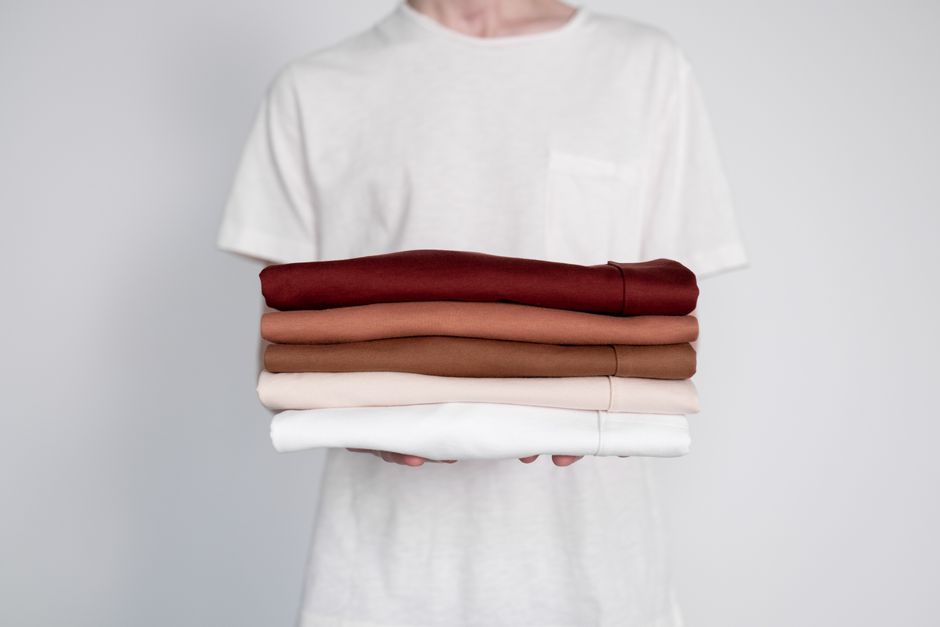
This is the exact distribution I recommend for most people. Adjust proportions based on your climate and job, but keep the total at 30.
| Category | Count | Examples | Notes |
|---|---|---|---|
| Tops (tees, blouses, knits) | 8 | Everlane Organic Cotton Crew, Uniqlo Merino Crewneck, COS Oversized Poplin Shirt | Mix of 4 neutral, 2 striped, 2 colored |
| Bottoms (jeans, trousers, skirts) | 6 | Levi’s 501 ’90s, Madewell Wide-Leg Trouser, Aritzia Effortless Pant | 2 denim, 2 tailored, 1 casual, 1 skirt |
| Dresses / Jumpsuits | 3 | Reformation knit dress, Everlane Utility Jumpsuit | One dressy, one casual, one work |
| Outerwear | 4 | Uniqlo Ultralight Down, Everlane Trench, vintage leather jacket | One for each season + one statement |
| Blazers / Structured Layers | 3 | J.Crew Regent Blazer, COS Relaxed Blazer, cardigan | At least one in black or navy |
| Knitwear | 4 | Uniqlo Cashmere Crewneck, Arket Roll Neck, cotton cardigan | Two lightweight, two heavy |
| Flex / Occasion | 2 | Silk slip dress, tailored vest | For events, dinners, interviews |
That’s 30. If you live in a warm climate, swap two knitwear slots for extra tops or a second dress. In a cold climate, drop one dress and add a heavy coat. The template flexes; the total stays 30.
Step-by-Step: Building Your Capsule Without Losing Your Mind
Don’t do this in one day. Rushing leads to bad decisions and over-purging. Give yourself two weekends.
Step 1: The 30-Day Tracking Exercise (Do This First)
Before you buy or donate anything, track what you actually wear for 30 days. Put a sticky note or a hanger flip on every item you wear. At the end of the month, you’ll see the truth: the same five shirts, two pairs of pants, and one jacket. Those are your capsule anchors. Build around them.
Step 2: Remove the Obvious Dead Weight
Anything you didn’t wear in those 30 days goes into a box. Not the trash — a box. If you don’t open the box in 90 days, donate it. This protects you from the panic of permanent decisions. Most people find they never miss anything in the box.
Step 3: Fill the Gaps With a Shopping List
Now look at what’s left. If you have eight tops but only one pair of pants that fits, your list writes itself. Write down exactly what you need: “one pair of black straight-leg trousers, under $100.” Do not browse. Browse is how you end up with a sequin top you’ll never wear.
Step 4: The One-In, One-Out Rule Going Forward
Every new piece replaces an old one. This keeps you at 30 permanently. It also forces you to ask: “Is this better than what I’m replacing?” If the answer isn’t yes, don’t buy it.
The Mistakes That Kill Capsules Before They Start

Most capsule wardrobes fail within six weeks. Here’s why.
Mistake 1: Buying a “capsule” all at once. You’ll end up with a matching set that looks like a uniform and fits your fantasy self, not your real body. Build gradually. Replace as you go.
Mistake 2: Choosing pieces that don’t layer. A capsule works because pieces combine. That chunky knit that only works over one specific dress? Dead weight. Every top should work under at least two of your outerwear pieces.
Mistake 3: Ignoring fabric quality. A $15 polyester blouse that pills after three washes isn’t a capsule piece; it’s a placeholder. You’ll replace it in two months. Spend more on fewer items. The Everlane Organic Cotton Crew ($30) outlasts three fast-fashion tees.
Mistake 4: Not accounting for laundry reality. If you do laundry once a week, you need seven days of tops minimum. If you hate ironing, don’t buy linen. Capsules fail when they don’t match your actual habits.
Seasonal Rotation: Keeping 30 Pieces Year-Round
A 30-piece capsule doesn’t mean the same 30 pieces in January and July. It means you have a 30-piece active rotation at any given time. Store off-season items in a separate box or under-bed container. Swap twice a year.
Your spring/summer capsule might include: 8 tops (linen shirts, tees, tanks), 5 bottoms (shorts, light trousers, one skirt), 3 dresses, 2 light jackets, 2 knit layers, 2 flex pieces, and the rest in sandals and loafers. Your fall/winter capsule swaps shorts for wool trousers, linen for merino, and adds a heavy coat.
The key: the total stays 30. You’re not adding; you’re rotating. This is where the system actually works long-term. The Uniqlo Merino Crewneck ($39.90) works in both rotations — that’s the kind of piece to prioritize.
What a Real 30-Piece Capsule Looks Like: A Concrete Example
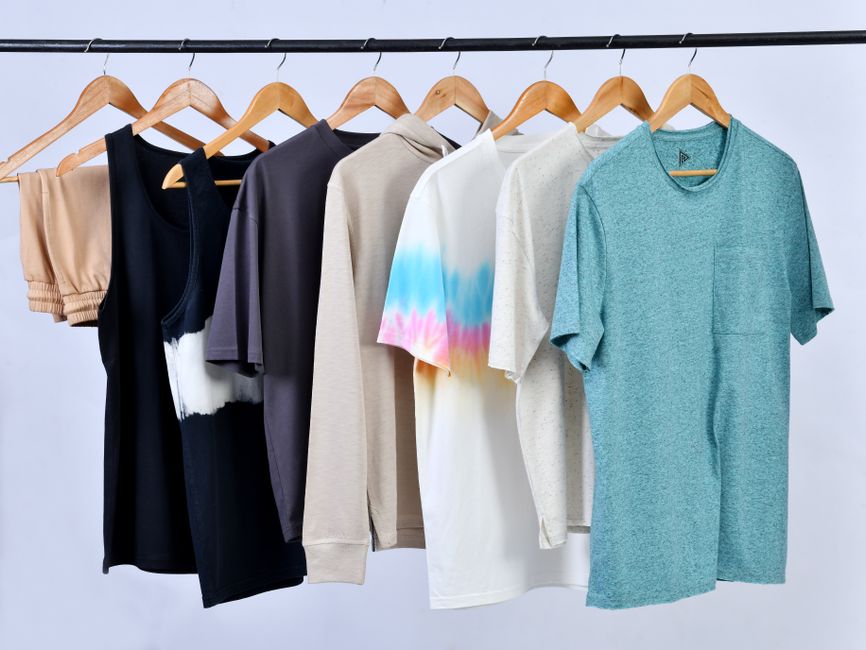
Here’s a complete 30-piece capsule for someone in a business-casual office, living in a four-season climate. This is not theoretical. These are specific pieces from brands that hold up.
- Tops (8): Everlane Organic Cotton Crew in white and black ($30 each), Uniqlo Supima Cotton Tee in gray ($19.90), COS Oversized Poplin Shirt in white ($89), Arket Striped Long-Sleeve Tee ($39), Madewell Ribbed Tank in black ($22), Uniqlo Merino Crewneck in navy ($39.90), Everlane Silk Relaxed Shirt in cream ($98).
- Bottoms (6): Levi’s 501 ’90s in medium wash ($98), Everlane The Way-High Jean in black ($118), Aritzia Effortless Pant in black ($148), Madewell Wide-Leg Trouser in camel ($128), Uniqlo Pleated Wide Pants in gray ($49.90), COS A-Line Midi Skirt in black ($89).
- Dresses / Jumpsuits (3): Everlane Utility Jumpsuit in olive ($128), Reformation knit midi dress in black ($128), Madewell shirt dress in chambray ($118).
- Outerwear (4): Everlane Trench Coat in beige ($248), Uniqlo Ultralight Down Jacket in black ($79.90), vintage Levi’s denim jacket ($65 on resale), Arket Wool Overcoat in camel ($249).
- Blazers / Structured Layers (3): J.Crew Regent Blazer in navy ($168), COS Relaxed Blazer in black ($135), Uniqlo Lambswool Cardigan in gray ($49.90).
- Knitwear (4): Uniqlo Cashmere Crewneck in camel ($99.90), Arket Roll Neck in black ($89), Everlane Alpaca Crew in cream ($138), Madewell Cotton Cardigan in ecru ($88).
- Flex / Occasion (2): Everlane Silk Slip Dress in champagne ($120), COS Tailored Vest in black ($79).
Total: 30 pieces. Every top works with at least three bottoms. Every blazer works over at least four tops. The color palette — black, white, camel, navy, gray, olive — means everything combines without thought. That’s the point.
You don’t need these exact brands. You need this exact logic: neutral base, two or three accent colors, every piece earning its slot through versatility and quality.
The 30-piece capsule works because it removes decision fatigue. You open your closet, everything fits, everything goes together, and you spend your mental energy on things that matter more than what to wear.
]]>This isn’t about deprivation. It’s about building a system where every item works with at least 3 others. Here’s exactly how I did it, the mistakes I made, and the rules you need to copy.
The 20-Item List: What I Kept and Why
My final list breaks down into five categories: tops, bottoms, dresses, outerwear, and shoes. I excluded accessories, undergarments, and gym clothes — those live outside the system. Here’s the full inventory with the specific pieces and why each earned its spot.
| Category | Item | Brand / Spec | Why It Stayed |
|---|---|---|---|
| Tops (6) | White poplin shirt | Uniqlo, $49.90 | Works under blazers, alone, or tucked into skirts |
| Tops (6) | Black silk-shell top | Everlane, $88 | Dresses up any bottom, no ironing needed |
| Tops (6) | Striped Breton tee | Saint James, $75 | Casual Fridays, but still polished |
| Tops (6) | Grey crew-neck sweater | COS, $99 | Mid-weight, layers without bulk |
| Tops (6) | Camel turtleneck | Uniqlo, $39.90 | Winter warmth without a jacket |
| Tops (6) | Black knit polo | Arket, $59 | Replaces a blazer in summer |
| Bottoms (5) | Black tailored trousers | Reiss, $120 | The anchor of the whole system |
| Bottoms (5) | Navy wide-leg pants | Mango, $79.99 | Flowy but professional |
| Bottoms (5) | Grey straight-leg jeans | Levi’s 501, $98 | No blue denim — grey dresses up better |
| Bottoms (5) | Black A-line skirt | COS, $69 | Knee-length, works with every top |
| Bottoms (5) | Camel pleated skirt | Uniqlo, $49.90 | Texture adds interest without prints |
| Dresses (2) | Black sheath dress | H&M, $49.99 | Boardroom to dinner in one piece |
| Dresses (2) | Navy shirt dress | Everlane, $98 | Belted or loose, always looks intentional |
| Outerwear (3) | Black blazer | Zara, $89.90 | Structured, not boxy |
| Outerwear (3) | Beige trench coat | Burberry (old), $0 now | Classic, waterproof, covers everything |
| Outerwear (3) | Grey cardigan | Arket, $79 | Layers over dresses or tops |
| Shoes (4) | Black leather loafers | Dr. Martens, $160 | Comfortable, polished, 3-year lifespan |
| Shoes (4) | Nude pumps | Sam Edelman, $120 | 2-inch heel, walkable all day |
| Shoes (4) | White leather sneakers | Veja, $150 | Casual days, still clean |
| Shoes (4) | Black ankle boots | Stuart Weitzman, $398 | Winter staple, goes with everything |
That’s 20 items. Total cost if bought new: around $1,900. But I already owned most — I replaced only 4 pieces. The point isn’t spending; it’s editing.
The 3 Rules I Used to Cut My Closet in Half
I didn’t just toss things randomly. I applied three hard rules. Each one eliminated a specific type of waste.
Rule 1: The 3-Outfit Test
Every piece had to create at least 3 complete outfits with items already in the keep pile. If a top only worked with one pair of trousers, it went out. I tested this by physically pairing items. My navy wide-leg pants, for example, matched the white shirt, the grey sweater, and the black polo — that’s 3 outfits right there.
Rule 2: No Prints Unless They’re Neutral
Stripes and checks were the only patterns allowed. Why? Because prints force you to coordinate. A floral blouse only works with solid bottoms in matching colors. A striped tee works with black, navy, grey, and camel. I cut 7 printed tops immediately.
Rule 3: The 80/20 Rule
I tracked what I actually wore for 2 weeks. 80% of my outfits came from 20% of my closet — the same black trousers, white shirt, and blazer. So I asked: why keep the other 80%? I donated everything that didn’t make the cut. It felt brutal, but it was honest.
These rules aren’t new — capsule wardrobe advocates have used them for decades. But the key is applying them ruthlessly. If you hesitate on an item, it goes.
My Morning Routine: Before vs. After
Here’s the real before-and-after, measured with my phone timer.
Before the 20-item wardrobe: Woke up at 7:00. Stood in front of the closet for 10 minutes. Tried on 2 outfits. Rejected both. Went back to the same black trousers I wore Tuesday. Total time: 38 minutes, plus frustration.
After: Woke up at 7:00. Checked the weather (5 seconds). Picked a top based on temperature. Picked bottoms based on meetings. Grabbed a blazer if I had a presentation. Total time: 8 minutes, no stress.
The difference isn’t just time. It’s decision fatigue. Every choice you make in the morning drains mental energy you need for work. By removing 15+ outfit decisions, I freed up that cognitive load for actual tasks.
How I Plan Outfits on Sunday
Every Sunday, I spend 10 minutes laying out 5 outfits — one for each workday. I photograph them on my phone. On Monday morning, I just look at the photo and grab the pieces. This is the single biggest time-saver. It costs nothing and takes less time than scrolling Instagram.
I also use a simple rule: one pattern, one solid, one neutral. For example, striped tee + black trousers + camel cardigan. That combo always works.
What I Learned: The Mistakes I Made First Time

My first attempt at a capsule wardrobe failed. I cut too aggressively and ended up with pieces that didn’t match. Here are the three biggest mistakes I made, so you don’t have to.
Mistake 1: Cutting for Aesthetics, Not Function
I kept a beautiful silk blouse that I wore once in 3 months. Why? Because it needed dry cleaning and I was afraid to spill coffee. Function beats beauty every time. Now, every piece is machine-washable or easy-care. My Uniqlo silk-shell top hand-washes in 2 minutes.
Mistake 2: Ignoring Your Actual Dress Code
I worked in a business casual office, but I kept 5 cocktail dresses. They looked great in my closet, but I never wore them to work. Your wardrobe must match your real life, not your fantasy life. If you WFH three days a week, you need more knit polos and fewer blazers.
Mistake 3: Not Testing Colors First
I assumed navy and black would clash, so I excluded navy. Wrong. Navy and black can look chic if the textures differ — like a navy knit with black trousers. Test combinations physically before you commit. Take photos and look at them. Your eye is better than a rule book.
One more tip: spend money on shoes and outerwear. Those are the pieces that get the most wear and make the biggest visual impact. A $400 pair of boots you wear 100 times a year costs $4 per wear. A $50 pair you wear twice costs $25 per wear. That math changed my spending.
How to Build Your Own 20-Item Wardrobe in 5 Steps

You don’t need to copy my list. You need to build yours. Here’s the exact process I’d follow if I started over.
- Pull everything out. Empty your closet onto the bed. You need to see everything at once.
- Sort into piles: Work, weekend, gym, special occasions. Only the work pile matters for this system.
- Apply the 3-outfit test to every piece in the work pile. Set aside anything that doesn’t pass.
- Identify the gaps. You’ll probably find you have too many tops and not enough bottoms. That’s normal. My initial pile had 14 tops and 3 bottoms.
- Fill gaps with quality basics. Buy the best you can afford. For me, that meant a new pair of black trousers ($120) and a grey sweater ($99).
That’s it. You’re done. The whole process takes about 4 hours on a Saturday.
One final thought: the goal isn’t to own fewer things. It’s to own the right things. When every item in your closet works, you stop shopping out of frustration. You stop buying a new blouse because you have nothing to wear. You save money, time, and mental energy.
My mornings are now 30 minutes shorter, and I feel more put-together than when I had 100 pieces. That’s not an exaggeration — that’s the math.
]]>