Why the Standard Size Chart Has Always Been Wrong
Fashion’s standard sizing system was built in the 1940s using measurements from a narrow sample of young, white, military women. That data was never meaningfully updated. Brands adopted it, competitors copied it, and the industry locked into a system designed around a body type that represents a minority of actual shoppers.
Here’s what the data shows: the average American woman is a size 16–18 (NPD Group, 2026). The plus-size market — generally defined as size 14 and above — represents 67% of American women. Yet as of 2026, only about 20% of clothing styles from major retailers are available in extended sizes.
What “Standard” Sizing Actually Covers
Most brands define their standard range as XS through XL. In practice:
- XS typically fits a 32–34″ bust
- XL typically fits a 42–44″ bust
- A size 16 woman often needs a 44–46″ bust
That means a large portion of shoppers are routed to a different section — fewer styles, fewer trendy cuts, inconsistent quality control. The clothes technically exist. The design attention often doesn’t.
Why Brands Resist Expanding Their Range
Grading costs money. Every new size requires re-grading patterns, re-fitting on a fit model at that exact size, and adjusting construction details — longer zippers, repositioned darts, reinforced seams. Brands that do this properly spend 20–30% more on product development for extended sizes. Many skip it. They grade up mechanically without re-fitting, which is why a 2X at one brand fits nothing like a 2X at another.
The Plus-Size Tax Is Real
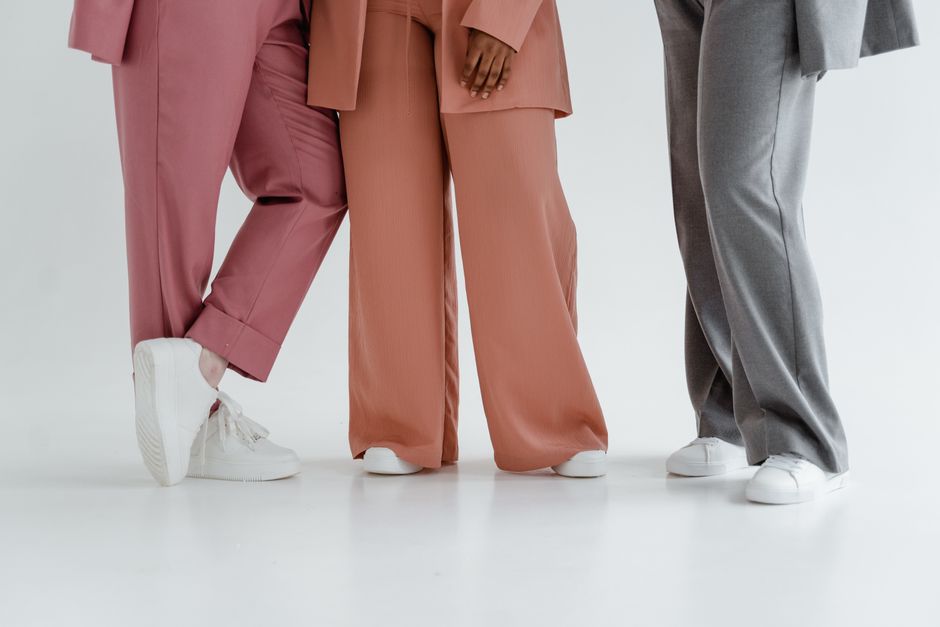
Brands routinely charge 10–20% more for sizes 1X and above — even when the fabric cost difference is marginal. Old Navy made headlines in 2026 when it added a $12–15 surcharge for plus-size women’s styles while charging men’s extended sizes at standard pricing. Before you buy, check whether the 1X version costs more than the size M. If it does, factor that into whether the brand actually values your business.
Which Brands Actually Deliver: A Direct Comparison
This is where specifics matter. I looked at size range, fit consistency, per-item pricing, and whether extended styles match the core collection — or get a separate “curve” section with two options in beige and black.
| Brand | Size Range | Avg. Price (Top/Dress) | Styles Match Core? | Fit Consistency |
|---|---|---|---|---|
| Universal Standard | 00–40 | $80–$160 | Yes — same styles, same launch dates | High |
| Good American | 00–32 | $70–$150 | Yes | High |
| Eloquii | 14–28 | $60–$140 | Yes (plus-size dedicated) | High |
| Torrid | 10–30 | $40–$100 | Yes (plus-size dedicated) | Medium–High |
| ASOS Curve | 18–30 | $30–$80 | Partial — separate section | Medium |
| Savage X Fenty | XS–4X | $20–$60 (lingerie) | Yes | High |
| Anthropologie | XS–26W | $80–$200 | Partial — limited extended selection | Low–Medium |
The clear leaders: Universal Standard and Good American. Both fit-test every size with dedicated fit models, not by scaling up a size 4 pattern. Universal Standard runs the widest range of any mainstream brand (00–40) and offers a Fit Liberty program — free replacement if your size changes within 12 months of purchase. Good American, co-founded with size inclusivity as a founding principle rather than an afterthought, launches every style in every size simultaneously.
Eloquii and Torrid are the strongest dedicated plus-size brands. But if you sit between a size 10 and 14, neither serves you well. That mid-range gap is genuinely underserved and rarely discussed.
How to Read a Size Chart Without Wasting Money on Returns
Shopping by your label size is the first mistake. Vanity sizing means a “size 12” varies by 4–6 inches across brands. Your actual body measurements don’t change. Use those instead.
Measure Yourself First
Three numbers: bust (fullest point), waist (narrowest point), hips (fullest point). Soft measuring tape. Takes three minutes. Write them down. These are your compass for every online purchase.
What to Look for on a Size Chart
Look for body measurements, not garment measurements. A chart that says “size 1X = fits 42–44″ bust” is usable. A chart showing garment measurements without a body-to-garment key is nearly useless unless you know how much ease you prefer. Good brands publish both. If a brand only publishes garment measurements, that’s already a signal about how much thought went into their sizing.
Return Policy Is Part of Your Fit Strategy
For extended sizes bought online, return policy matters as much as the size chart. Universal Standard: free returns. Good American: free exchanges within 30 days. Eloquii: 60-day return window. Torrid: in-store returns accepted. ASOS: free returns within 28 days. Know this before ordering three sizes to find the one that fits — $8 return shipping per box adds up fast.
When “Extended Sizing” Is a Marketing Claim, Not a Reality
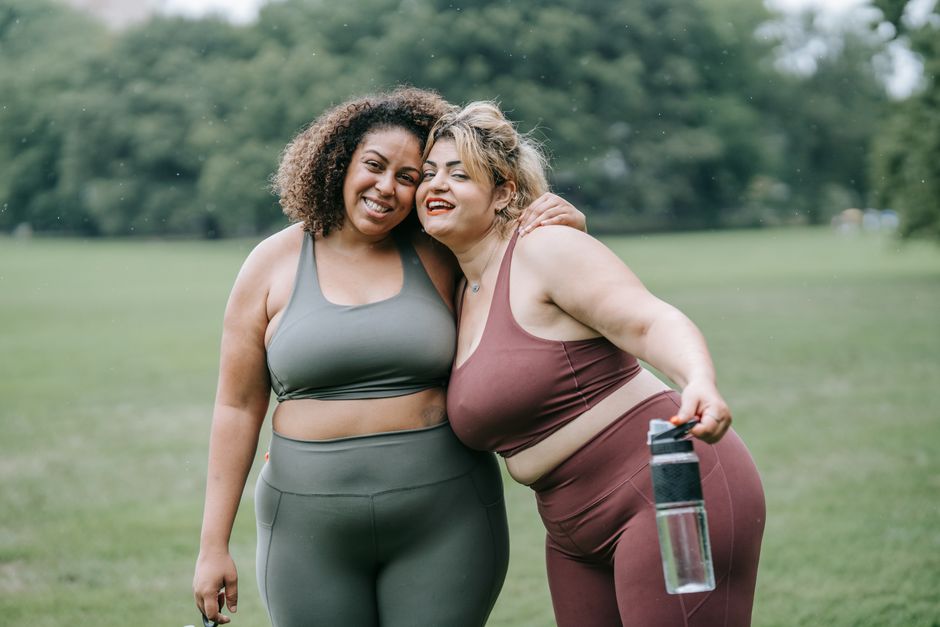
Some brands expand their size range on paper without doing the actual work. Here’s what that looks like in practice:
- The “Curve” Sidebar: If extended sizes live in a separate section with 15 options while the main site offers 400 styles, the brand hasn’t committed to inclusion — it created a tokenized annex and called it progress.
- Mechanical grading with no re-fit: Scaling a size 4 pattern up to a 2X without re-fitting means the shoulders sit wrong, the bust gaps, and the hip seams pull. The garment technically closes. It doesn’t actually fit.
- Launch-date exclusion: If core styles launch in standard sizes and extended sizes “come later,” that’s a deliberate policy to deprioritize larger customers at peak demand.
- Same price, worse fabric: Some fast-fashion brands quietly use lower-grade fabric in extended sizes. Check the fabric composition listed across size ranges on product pages before buying.
Anthropologie is a useful case study. They offer up to 26W, which sounds inclusive on paper. Customer feedback consistently reports fewer extended styles, re-graded rather than re-fitted patterns, and unavailability in the season’s key colorways. The size range expanded. The commitment didn’t follow.
The brands that built inclusivity into their founding model — Universal Standard in 2015, Good American in 2016, Eloquii in 2011 — outperform brands that bolt it on after the fact. That’s the difference between designing a house with a complete blueprint versus adding a room to something that was never meant to hold it. The size gap between what the average body needs and what most stores actually stock is closing — but only at the brands that chose to close it before it was fashionable to say so.
]]>The problem isn’t your body. The problem is the silhouette wasn’t cut for you. Most plus-size clothing is just a straight-size pattern graded up. That means a size-medium dress gets mathematically stretched to a size 20, but the proportions? They stay the same. Your shoulders, bust, waist, and hips don’t scale up at identical rates. You need a silhouette that starts with your proportions, not one that was adapted to them as an afterthought.
This guide walks through the four dress silhouettes that actually deliver for plus-size bodies, why they work, and which ones to leave on the rack.
The A-Line: The One That Never Lets You Down
An A-line dress fits at the shoulders and bust, then gradually widens toward the hem, creating a shape that looks like a capital A. No defined waist seam. No cinching. Just a clean, diagonal line from top to bottom.
Why it works so reliably for plus-size bodies: it skips the waist entirely. If you carry weight in your midsection, an A-line doesn’t fight that. It skims over it. The eye follows the diagonal outward, which creates a lengthening effect. You look taller, not wider.
Universal Standard’s A-line dresses nail this. Their patterns are developed on plus-size fit models, not graded up from a size 2. The shoulder-to-bust ratio actually accounts for broader backs and fuller upper arms. Eloquii also does a sharp A-line, especially in their workwear line. Look for fabrics with some structure—ponte knit, midweight crepe, or a wool blend for fall. Slinky jersey will cling in a way that defeats the purpose.
One thing people miss: sleeve length matters on an A-line. A cap sleeve on a broader shoulder can cut the arm at its widest point. A three-quarter sleeve or a dolman sleeve keeps the line clean. If you find an A-line with a dolman cut, buy two.
The armhole test
Before you even try an A-line on, check the armhole. If the seam cuts straight across in a rigid line, it’ll dig into your underarm. You want an armhole that curves slightly forward. This is a tailoring detail that separates a $40 dress from a $120 one, and it’s worth the money.
Fit-and-Flare: When You Want a Waist Without the Fight

The fit-and-flare has a fitted bodice that ends at the natural waist, then a skirt that flares out. Unlike the A-line, it has a waist seam. That seam is either your best friend or the reason you return the dress.
For a fit-and-flare to work on a plus-size body, that waist seam must sit at your natural waist—the narrowest point of your torso, which is usually just below your ribcage. Not at your belly button. Not lower. If the seam hits below your natural waist, it widens you at your widest point. That’s the failure mode.
Brands that get this right: eShakti lets you customize the waist placement by inputting your exact height and torso length. For off-the-rack, Anthropologie’s plus-size line (sold online) tends to cut their fit-and-flare bodices shorter, which lands the seam higher. City Chic, an Australian plus-size brand available through ASOS and Nordstrom, specializes in this silhouette and rarely misses on waist placement.
The other piece that matters: the flare angle. A skirt that flares too aggressively from the waist adds volume at the hip. You want a gentler A-line flare from the waist down, not a circle skirt that doubles your width. A half-circle or three-quarter-circle skirt works. Full circle? Only if the fabric is whisper-thin.
Petite plus? This gets tricky
If you’re 5’3″ or under and plus-size, the fit-and-flare waist seam often lands too low because the pattern was drafted for someone 5’6″. eShakti’s customization solves this. Otherwise, look for “petite plus” specifically. Torrid carries petite-length jeans but rarely petite dresses. Lane Bryant’s petite selection is limited but worth checking.
The Wrap Dress: One Shape, Every Body
The wrap dress is the closest thing to a universal silhouette. It wraps across the front and ties at the side, which means you control the fit every time you put it on. Gained weight? Tie it looser. Lost weight? Pull it tighter. No other dress adapts to your body week to week.
Diane von Furstenberg basically invented this dress in the 1970s, and her plus-size range is the gold standard. But at $500+, it’s an investment. For under $150, Boden’s wrap dresses in their extended sizes use a heavier jersey that doesn’t cling and a true wrap (not a faux-wrap with a side zipper—avoid those; they defeat the adjustability).
The key detail: the tie placement. A side-tie wrap dress creates a diagonal line across your torso. That diagonal is slimming on every body. A center-tie wrap creates a vertical line that can read as a bathrobe. Side-tie only.
Also, the wrap must be deep enough. A wrap that barely crosses over leaves a gap when you sit down. You want at least 6-8 inches of overlap across the bust and belly. If the wrap is shallow, size up.
The V-neck depth
A wrap dress creates a V-neck by default. The depth of that V matters. Too deep, and you’re fidgeting all day. Too shallow, and it cuts a straight line across your collarbone that widens your upper body. You want the V to end about 2-3 inches above your sternum. A snap or a small safety pin at the crossover point gives you control over this without a tailor.
A Quick Verdict on Four Silhouettes

| Silhouette | Best for | Skip if | Top brand pick |
|---|---|---|---|
| A-Line | Apple shapes, anyone who skips waist definition | You want curves emphasized | Universal Standard |
| Fit-and-Flare | Hourglass, pear shapes | Waist seam hits wrong; you’re petite-plus | eShakti (customized) |
| Wrap | Every shape; weight-fluctuating bodies | You hate adjusting ties | Boden (extended sizes) |
| Shift | Straight/rectangular shapes | Full bust, defined hips, or you want waist shape | Eileen Fisher |
Three Mistakes That Ruin the Fit Before You Even Try It On
Mistake 1: Ignoring the shoulder seam. The shoulder seam should sit exactly at the edge of your shoulder, where the bone ends. If it droops onto your upper arm, the whole dress hangs wrong. The armhole pulls, the bust darts sit in the wrong spot, and the waist hits low. This is the first thing to check on the hanger. If the shoulder seam is already an inch past where it should be, put the dress back.
Mistake 2: Buying for the body you plan to have. This is the “I’ll lose 10 pounds” purchase. You won’t lose it by Saturday’s wedding. Buy the dress that fits your body today. A tailor can take a dress in if you lose weight later. They can’t let it out if there’s no seam allowance—and most fast-fashion dresses have zero seam allowance.
Mistake 3: Assuming stretch fabric fixes everything. Stretch hides fit problems; it doesn’t solve them. A dress with 5% spandex will stretch over your hips, sure. But it’ll also stretch horizontally at the bust and pull the neckline down. You’ll spend the night hiking it up. Structured fabrics with minimal stretch (2% or less) hold their shape. You want the dress to hold you, not the other way around.
When to Skip Dresses Entirely
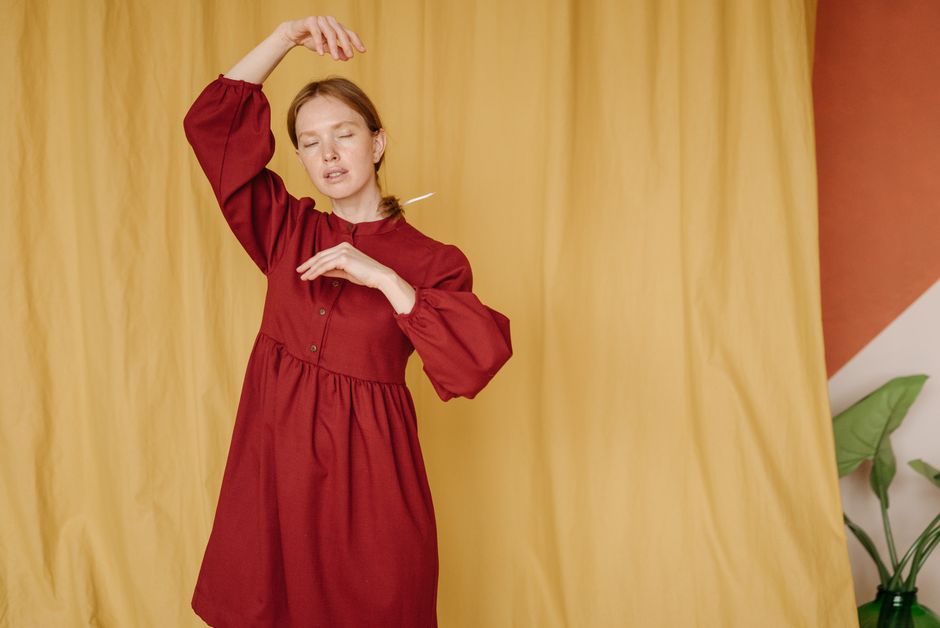
This sounds like heresy in a dress guide, but hear me out.
If your proportions fall far outside standard plus-size grading—say you have a very full bust (F cup or larger) with narrow hips, or broad hips with a small bust—dresses will almost always require tailoring. That’s not a body problem. That’s a manufacturing problem. The industry cuts for an average that doesn’t exist.
In that case, a two-piece set or a coordinated top and skirt often fits better and costs less than a dress plus alterations. You can buy a size 18 top and a size 22 skirt from the same print. ASOS Design and Eloquii both release matching sets each season. You get the dress look without the dress fit compromise.
Also, if you’re shopping for a formal event with zero time for returns or tailoring, a jumpsuit in a structured crepe often fits more bodies off the rack than a formal dress. City Chic and Anthropologie both do excellent plus-size jumpsuits with defined waists and wide legs that read as formal.
How to Read a Size Chart Like You Mean It
Most people check the bust, maybe the waist, and call it done. That’s how you end up with a dress that fits in the chest but won’t zip over your hips.
Here’s the order of operations:
- Hips first. Find your hip measurement on the size chart. That’s your starting size. In woven fabrics without stretch, the hip measurement is the hard limit. The dress will not go past it.
- Bust second. If your bust measurement falls in a larger size than your hips, go with the bust size and plan to tailor the hips. It’s easier to take in than let out.
- Waist last. The waist is the most alterable part of a dress. If the bust and hips fit but the waist is loose, a tailor can fix that for $20-30.
Also, ignore the number. A size 22 at Torrid is not a size 22 at Boden. The number means nothing. The measurements mean everything. Measure yourself with a cloth tape every six months. Bodies change. Your size chart reference should too.
The Silhouette That Solves the Most Problems
If I had to pick one silhouette for the widest range of plus-size bodies, it’s the wrap dress with a side tie. It adjusts to your exact proportions on that day. It works on apple, pear, hourglass, and rectangle shapes. It creates a waist if you don’t have one and defines one if you do. It works for office, dinner, and weddings depending on the fabric and accessories.
The Boden wrap dress in their ponte fabric is the specific pick. It’s $130-160, the wrap is deep enough to prevent gaps, the side tie sits at the natural waist, and the fabric holds its shape through a 12-hour day. If that’s out of budget, ASOS Curve wrap dresses run $40-70 and are worth trying—just check the wrap depth before you commit.
You walked into the fitting room with a dress that fought your body. You walk out knowing exactly which silhouette works with it. That’s the whole point.
]]>