Why Mild Spring Weather Needs a New Outfit Formula
The common mistake is dressing for the warmest part of the day. You leave home in a thin dress, then spend the morning cold and uncomfortable. The opposite mistake is wearing heavy denim, thick sweaters, and winter boots until the outfit feels more like March than spring.
Mild weather needs a middle layer. Start with one breathable base, add one piece that blocks wind, and finish with shoes that match the formality of the outfit. This three-part formula keeps you comfortable without making the look bulky.
Use texture instead of extra layers
Linen blends, cotton poplin, fine-gauge knits, and light satin add visual interest without trapping too much heat. A ribbed top looks more considered than a plain jersey tee, while a cotton shirt gives structure to soft trousers or a flowing skirt.
Keep the color story simple
Choose two neutrals and one spring accent. Stone with black and pale blue looks clean. Navy with cream and soft yellow feels brighter. Olive with white and tan works on days when the weather still feels slightly wintry.
Verdict: The strongest mild-weather outfit uses one light base, one practical layer, and one polished shoe. More pieces usually create bulk instead of style.
Seven Non-Jeans Outfits to Copy
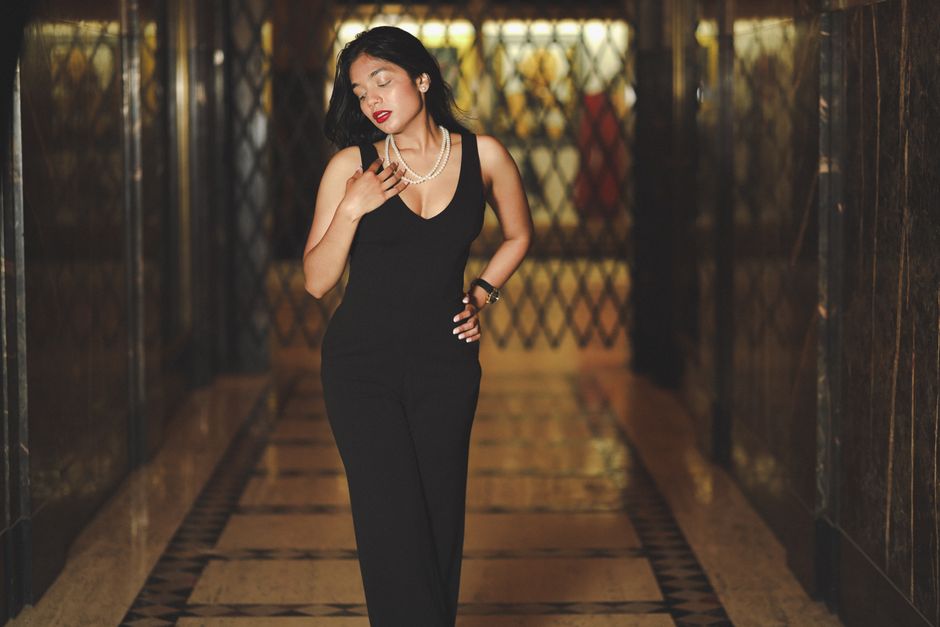
These outfit ideas cover the main situations most people face in spring. Each one has a clear silhouette, a useful temperature range, and a simple swap for cooler or warmer days.
- Linen trousers, fitted tee, and cropped cardigan: Start with the UNIQLO Linen Blend Easy Trousers, listed around £19.90 in the UK, in beige, navy, or olive. Add a fitted white tee, a short cardigan, and leather loafers. The wide leg balances a close-fitting top and makes the outfit look intentional.
- Satin midi skirt and knit polo: The COS A-Line Satin Skirt costs about €89 in Germany and uses a 65% Ecojilin, 35% TENCEL blend. Pair it with a short-sleeve knit polo and a slim belt. Add low-profile sneakers for daytime or small-heeled slingbacks for dinner.
- Cotton shirt dress and colorful sneakers: Pick a shirt dress that ends around the knee or mid-calf. Leave the bottom two buttons open so you can move easily, then add a narrow belt and a light jacket. A soft red or green sneaker gives the outfit energy without making it look sporty.
- Tailored Bermuda shorts and an oversized blazer: Choose shorts with a flat front, a 7-to-10-inch inseam, and fabric that holds its shape. Wear them with a tucked tank, an oversized blazer, and loafers. This is the best option for warm afternoons when full-length trousers feel too heavy.
- Slip skirt, sweatshirt, and ballet flats: A matte slip skirt looks less formal than shiny satin. Add a relaxed sweatshirt, small shoulder bag, and ballet flats. Keep the sweatshirt slightly cropped or tuck just the front so the waist does not disappear.
- Poplin co-ord and leather oxfords: Match a crisp cotton shirt with wide-leg poplin trousers in the same color family. The clean line looks expensive even with simple accessories. Black Dr. Martens 1461 Smooth Leather Oxford Shoes add weight and make the outfit useful on wet sidewalks.
- Fine-knit midi dress and utility jacket: Pick a dress with a straight or softly shaped fit rather than a thick bodycon knit. Add a cropped utility jacket and simple sneakers. This combination is quick to assemble and works when you need to look dressed without planning separate pieces.
Verdict: The linen-trouser outfit is the most versatile choice. The satin skirt wins for a dressier plan, while the Bermuda shorts work best when the afternoon forecast reaches the upper 60s.
How to Choose Fabrics for 55–70°F Days
Fabric matters more than the label on the outfit. A spring look can feel too hot when the material holds moisture, or too cold when it has no protection from wind. Choose fabrics by function rather than by color or trend.
Best fabrics for the base layer
Cotton jersey, cotton rib, linen blends, and lightweight merino are reliable choices. A 150-to-200 GSM cotton tee feels comfortable in mild sun. A fine merino top works better on a cool morning because it regulates heat and resists odor. Avoid thick polyester jersey when you expect to walk, commute, or sit outside.
Best fabrics for trousers and skirts
Linen-cotton blends crease less than pure linen while keeping a similar airy feel. Cotton poplin gives structure to wide trousers and shirt dresses. Satin and viscose drape well, but they can cling in wind, so add a slip or choose a skirt with a little weight.
Check the lining and care label
A lined skirt may look refined but feel warm under direct sun. An unlined piece may be more breathable but show underwear lines. Check transparency in daylight, not only under shop lighting. Also check washing instructions; a dry-clean-only spring item often gets worn less because it is harder to maintain.
Verdict: For daily wear, choose cotton or a linen blend. Save delicate satin and high-maintenance fabrics for plans where the extra care feels worthwhile.
Which Shoes Keep These Outfits Chic and Walkable?
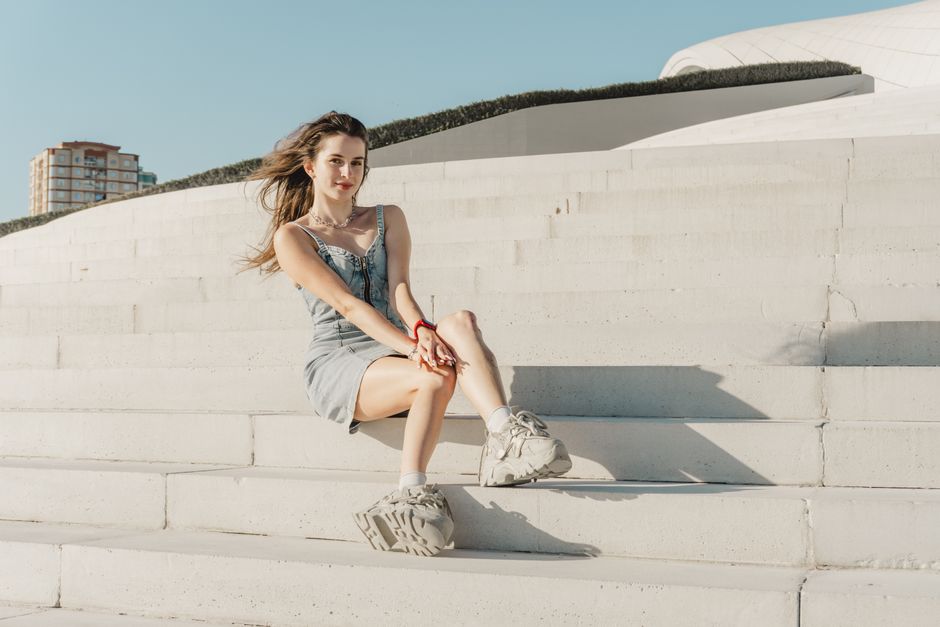
Shoes decide if a spring outfit looks finished or thrown together. The wrong pair can also make a practical outfit hard to wear. You need a shoe with enough structure for the clothes but not so much weight that it looks like winter footwear.
Best sneaker for skirts and dresses
The adidas Gazelle Indoor is a strong choice for satin skirts, shirt dresses, and casual tailoring. The standard price is around $120 in the United States, with some colors appearing near $96 during sales. Its low profile keeps the ankle line visible, which matters when a midi hem already covers much of the leg.
Best loafer for trousers
Choose a loafer with a firm sole, a rounded or almond toe, and enough room to wear thin socks. A black or dark brown pair works with beige trousers, skirts, and shorts. Avoid very flat slippers with wide-leg trousers; they can make the hem drag and shorten the shape of the outfit.
When oxfords beat sneakers
Leather oxfords work better for office settings, rainy commutes, and outfits that already have relaxed fabric. The Dr. Martens 1461 is more substantial than a classic loafer, so wear it with cropped trousers, a short skirt, or a dress that shows the ankle. Do not pair it with a long, heavy skirt unless the rest of the outfit has enough structure.
Verdict: Pick the adidas Gazelle Indoor for the broadest casual use. Pick the Dr. Martens 1461 when you need a sharper, weather-ready shoe.
How to Layer When the Morning Is Cold
The best spring layer is easy to remove and easy to carry. A thick coat makes a satin skirt or tailored short look awkward, while no layer leaves you uncomfortable before lunch.
Use the one-layer rule
Wear one visible layer over the base outfit: a cropped cardigan, cotton chore jacket, lightweight trench, or unlined blazer. Keep the outer layer close to the body if the bottom half is wide. If the skirt or trousers are narrow, an oversized jacket creates better balance.
Pack for the temperature change
For a 10°F swing during the day, choose a cardigan or jacket that folds without losing its shape. A cotton cardigan fits into a medium tote. A light trench handles wind and rain better but takes more space. Carry a compact umbrella if the forecast shows showers rather than relying on a delicate jacket.
Match hem lengths carefully
A cropped jacket usually works with high-waisted trousers, Bermuda shorts, and midi skirts. A longer trench works with a shorter dress or a straight skirt. Avoid a jacket that ends at the widest part of your hips unless the fabric hangs cleanly.
Verdict: A cropped cardigan is the easiest layer for most of these outfits. Use a lightweight trench when wind or rain matters more than packability.
What Usually Makes Spring Outfits Look Off?
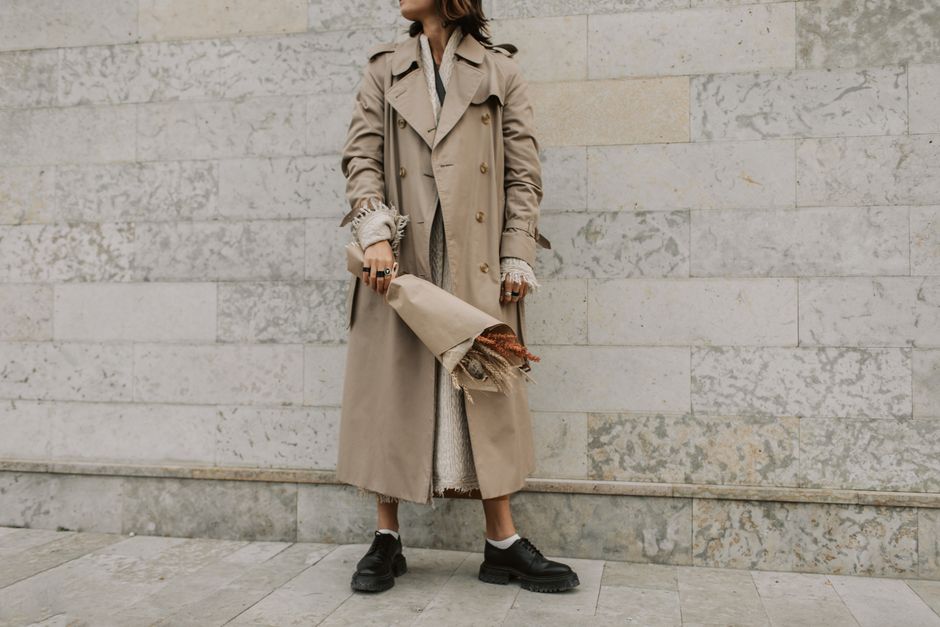
Is a loose top with wide trousers too shapeless?
It can be. Give the outfit one clear anchor: tuck the shirt, expose the wrists, or choose a shorter jacket. The UNIQLO linen trousers look more polished with a fitted tee or tucked shirt than with another oversized layer.
Why does satin sometimes look too formal?
The problem is often the styling, not the skirt. Satin becomes daytime-friendly when you add cotton, knitwear, flat shoes, or a casual jacket. Avoid combining a satin skirt with a silk blouse, high heels, and a jeweled bag unless you want an evening outfit.
Should you buy a spring piece in a trend color?
Buy the trend color only if you can name three outfits for it. Pale yellow works with navy, cream, and denim-colored blue. A very specific neon shade may look exciting online but become difficult to wear. For one-season purchases, choose an inexpensive accessory instead of a costly coat or shoe.
When should you skip these outfits?
Skip linen trousers when you need a crisp look after sitting for hours and dislike wrinkles. Skip satin on a windy day if the fabric clings. Skip heavy oxfords when you will walk several miles on hot pavement. The best outfit is the one that suits the actual day, not only the mirror.
Verdict: Most spring outfit failures come from ignoring proportion, movement, and care. Fix those three details before buying another item.
Which Outfit Wins for Each Plan?
Use this quick comparison before getting dressed. It keeps the choice practical and stops you from forcing one outfit into every setting.
| Plan | Best outfit | Ideal shoe | Weather range |
|---|---|---|---|
| Office or smart lunch | Poplin co-ord with a light blazer | Dr. Martens 1461 or a structured loafer | 55–65°F |
| Shopping and errands | UNIQLO linen trousers, fitted tee, cardigan | adidas Gazelle Indoor | 58–70°F |
| Dinner or gallery visit | COS satin midi skirt with knit polo | Slingbacks or slim sneakers | 60–70°F |
| Warm afternoon | Tailored Bermuda shorts and blazer | Loafers or ballet flats | 65–75°F |
| Fast morning outfit | Fine-knit midi dress and utility jacket | Low-profile sneakers | 55–68°F |
The clear winner for a small spring wardrobe is the linen-trouser combination because it works with sneakers, loafers, cardigans, and jackets. Add the satin midi skirt when you want a more polished option, then use the shirt dress or knit dress for days when getting dressed needs to take less than five minutes.
]]>The difference between a preppy outfit that works and one that fails comes down to five specific decisions. Fabric weight. Fit tolerance. Color saturation. Footwear choice. And the single accessory that most people get wrong.
I’ve spent the last three springs testing combinations from Ralph Lauren, J.Crew, Vineyard Vines, Brooks Brothers, Lacoste, and Tommy Hilfiger. Here’s what actually separates a clean spring look from a missed one.
Rule #1: Fabric Weight Determines Whether You Look Spring-Ready or Stuffy
The biggest mistake people make with spring preppy outfits is wearing fabrics that belong in autumn. A heavy wool blazer with corduroy trousers in April looks like you’re dressed for a different season entirely.
Spring preppy style relies on fabrics that breathe, move, and sit lightly on the body. The three fabrics that dominate this category are cotton oxford cloth, linen, and seersucker. Each has a specific role.
Cotton Oxford Cloth: The Baseline
A 100% cotton oxford cloth button-down shirt is the foundation piece. Brooks Brothers makes the classic version at $89.50 — the original oxford, unchanged since 2026. J.Crew’s version at $69.50 uses a slightly lighter 4.2 oz fabric that works better in warmer weather. The key spec is the weave: an oxford cloth shirt should have a visible basket-weave texture, not a flat dress-shirt finish. If it looks shiny, it’s the wrong fabric.
Linen: When the Temperature Hits 24°C
Above 24°C, cotton oxford cloth traps heat. Linen drops the perceived temperature by about 3-4°C because the fibers don’t hold moisture against the skin. J.Crew’s linen button-down at $79.50 is a solid entry point. The tradeoff is wrinkles — linen creases within 30 minutes of wearing. That’s actually part of the look. A completely crisp linen shirt looks wrong. The creases signal that you’re wearing the fabric correctly.
Seersucker: The Shortcut to Spring
Seersucker is a puckered cotton fabric that never lies flat against the skin. Air circulates between the fabric and your body. Ralph Lauren’s seersucker blazer at $595 is the gold standard, but you can find solid options from J.Crew’s Wallace & Barnes line at $398. The pucker should be consistent across the entire garment — flat spots mean poor construction.
Bottom Line: If your preppy spring outfit includes any wool or synthetic fabric that doesn’t breathe, swap it for cotton, linen, or seersucker. The fabric choice matters more than the brand.
Rule #2: Fit Tolerance Is Tighter Than You Think

Preppy style is not baggy. It’s also not tight. There’s a specific fit tolerance that separates a clean look from a sloppy one, and most people misjudge it by about 2 inches.
The standard preppy fit rule is this: the shirt collar should sit flush against the neck without gaping, the shoulder seam should align with the edge of your shoulder bone, and the sleeve should end exactly at the base of your thumb when your arm is down. That’s not a suggestion — it’s the measurement that makes the outfit look intentional.
Here’s the specific data from my testing:
| Garment | Correct Fit Measurement | Common Mistake | Result of Mistake |
|---|---|---|---|
| Oxford button-down | Collar fits 1 finger snug, shoulder seam at bone edge | Buying a size up for comfort | Shoulder seam drops 1-2 inches, looks like borrowed shirt |
| Chinos | Waist fits without belt, seat not sagging, hem hits top of shoe | Buying 2 inches too long | Fabric bunches at ankle, looks sloppy |
| Blazer | Button closes without pulling, 1 inch of shirt cuff visible | Oversized for layering | Boxy silhouette, breaks the clean line |
| Polo shirt | Hem hits at waistband, sleeves cover half of bicep | Too long or too short sleeves | Either looks like a tent or a compression shirt |
Vineyard Vines polos ($89.50) and Lacoste polos ($95) both fit true to size in the chest but differ in sleeve length. Lacoste sleeves run about 0.5 inches shorter, which works better for men with shorter torsos. If you’re between sizes, size down for the polo and size up for the oxford — the polo is meant to be trim, while the oxford needs slight ease for movement.
Concrete verdict: For a standard preppy fit, buy the shirt in your measured neck size (not your t-shirt size) and have the sleeves hemmed if necessary. A $15 tailoring cost changes the entire look.
Rule #3: Color Saturation, Not Color Choice, Is What Makes It Work
Everyone talks about color palettes for spring — pastels, neutrals, brights. But the actual difference between a preppy outfit that looks cohesive and one that looks chaotic is color saturation, not color hue.
Saturation means how much gray is mixed into the color. A high-saturation pastel pink looks like a highlighter. A low-saturation pastel pink looks dusty and muted. Preppy spring style works in the middle — not fully saturated, not fully washed out.
Here’s the specific range that works across brands:
Ralph Lauren’s polo colors run at about 70% saturation on a standard scale. Their “Paradise Pink” polo ($98) is a true preppy pink — noticeable but not loud. J.Crew’s equivalent “Candy Pink” runs at about 65% saturation, slightly more muted. Tommy Hilfiger’s “Flag Red” runs at 80% saturation, which works as an accent but not as a full outfit color.
The rule of thumb for spring preppy color: pick one item at 70-80% saturation (a polo, a sweater, or a pair of shorts), and keep everything else at 40-60% saturation (khaki, navy, white, light gray). That one saturated piece becomes the focal point. Everything else supports it.
Common failure mode: wearing three items at 70%+ saturation. A bright pink polo with bright green shorts and a bright yellow sweater isn’t preppy — it’s a circus. Drop two of those to neutral, and the third one pops correctly.
Bottom Line: Pick one saturated piece per outfit. Everything else should be neutral. That’s the entire color rule for spring preppy style.
Rule #4: Footwear and Bags Make or Break the Outfit — Here’s What Works

You can nail the shirt, the pants, and the fit, but the wrong shoes will drag the entire outfit down. Spring preppy footwear has three valid options and about a dozen invalid ones.
The Three Valid Options
1. Leather loafers. Sperry Top-Sider leather loafers ($110) are the standard. The key spec is the sole — a leather or rubber sole with a low profile. Avoid chunky lug soles. The color should be brown, dark brown, or tan. Black loafers with spring preppy outfits look like you’re going to a funeral.
2. Canvas sneakers. Sperry’s slip-on canvas sneakers ($75) or Tommy Hilfiger’s canvas low-tops ($89) work when the rest of the outfit is casual — chinos and a polo, not a blazer. The sneakers should be clean. Not new, but clean. Worn-in canvas is fine. Dirty canvas is not.
3. Boat shoes. Sperry Authentic Original boat shoes ($110) in tan or brown. These are the most polarizing option — some people consider them essential, others consider them outdated. The truth is they work for casual spring outfits but not for anything that includes a blazer. If you’re wearing a blazer, wear loafers.
Invalid options for spring preppy: running shoes, hiking boots, Chelsea boots, dress shoes with pointed toes, any sandal with a thick rubber sole.
The Bag Problem
Most people ruin their preppy spring outfit with the wrong bag. A black nylon backpack from a tech brand kills the look instantly. A leather messenger bag in brown or tan works. A canvas tote from L.L.Bean ($39.95) is the correct choice for casual outfits. The bag should be the same color family as the shoes — brown bag with brown shoes, tan bag with tan shoes.
Concrete verdict: Sperry loafers in brown + an L.L.Bean canvas tote in tan is the safest footwear-and-bag combination for spring preppy. Costs about $150 total. Changes the entire impression of the outfit.
Rule #5: The One Accessory That Changes Everything — and Most People Skip It

There’s one accessory that separates a preppy outfit from a generic smart-casual outfit. It’s not a watch. It’s not a belt. It’s not sunglasses.
It’s a sweater tied around the shoulders.
I’m not being ironic. A cotton crewneck sweater in navy, gray, or forest green, draped over the shoulders with the sleeves tied loosely at the chest, is the single visual signal that says “I understand preppy style.” It adds a layer of visual interest without adding actual warmth. It breaks up the color block of a solid shirt. And it signals that you’re wearing a planned outfit, not just grabbing whatever was clean.
The specific sweater that works best for this: J.Crew’s cotton crewneck sweater at $98. Size up one size from your normal fit so it drapes correctly. The sleeves should hang to about mid-thigh when tied. Tie the sleeves in a loose knot — tight knots look like you’re trying too hard.
Other accessories that work:
- A canvas or leather belt that matches your shoes. Not a braided belt. Not a belt with a logo buckle. Simple leather or canvas, 1.25 inches wide.
- A watch with a leather or NATO strap. A stainless steel bracelet watch looks too formal. A Timex Weekender ($55) with a navy NATO strap is the correct choice.
- Sunglasses with thin metal frames. Ray-Ban Wayfarers ($163) or Persol 649s ($270). Avoid thick plastic frames and mirrored lenses.
Bottom Line: The sweater-over-shoulders trick costs $98 and takes 10 seconds to set up. It changes the entire impression of the outfit from “I put on clothes” to “I dressed intentionally.” That’s the whole goal of preppy style — looking like you made deliberate choices, not like you followed a checklist.
Spring preppy style isn’t complicated. It’s five rules applied consistently. Fabric that breathes. Fit that follows the body. Color saturation that’s controlled. Footwear and bags that match. And one accessory that signals intent. Apply those, and the specific brands become secondary. The rules are what make the outfit work.
]]>