I’ve been there. The racks can feel like a punishment.
But here’s what changes everything: you don’t need a magic eye for fashion. You need a system for elimination. Once you know what to reject instantly, the good stuff practically jumps out at you. This guide is that system—the fabric knowledge, the fit hacks, and the brutal honesty about when to walk away empty-handed.
The 3-Second Fabric Elimination Test
Your fingers are smarter than your eyes in a thrift store. Before you even look at the tag or the style, touch the fabric. Your hands will tell you in three seconds whether this piece deserves a spot on your body or belongs back on the death rack.
Natural fibers age gracefully. Synthetics age like milk. This is the single most important rule in vintage hunting.
Grab the fabric and scrunch it in your fist for three seconds. Let go. Wool, cotton, linen, and silk will spring back with some character but won’t hold a deep, sharp crease. Cheap polyester and acrylic will crinkle like a candy wrapper and stay that way. That crinkle is the ghost of future pilling, static cling, and that weird sweaty feeling you get after wearing plastic for four hours.
The weight test comes next. A well-made vintage garment feels heavier than it looks. Pick up a 1970s Pendleton wool shirt and then pick up a modern fast-fashion flannel. The Pendleton feels like it could stop a bullet. That density means the yarns were twisted tighter, the weave is denser, and the thing will outlive you.
Labels That Actually Meant Something
Union labels are gold. Look for the little rectangular “International Ladies’ Garment Workers’ Union” tag or “Amalgamated Clothing Workers of America” labels stitched into the side seams of pre-1990s pieces. These aren’t just cool history—they’re a guarantee that someone was paid enough to care about the stitching. Garments with these labels tend to have French seams, properly aligned patterns at the seams, and buttons that were sewn on to stay. I’ve found ILGWU-tagged blazers from the 80s with lining still perfectly intact while modern Zara blazers shred at the armpits after one season.
Country-of-origin tags tell a story too. “Made in USA” or “Made in England” on pre-1990s pieces usually signals higher manufacturing standards than modern equivalents. “Made in Hong Kong” from the 1960s-70s often means meticulous tailoring. But “Made in China” on anything claiming to be vintage before 1990 is an anachronism—walk away.
The Smell Test Nobody Talks About
Smell the armpits. Seriously. There’s a difference between “old closet” smell and “decades of someone else’s body embedded in the fibers.” The first one washes out with a vodka spray and some sunshine. The second one is permanent. You cannot fix it. Dry cleaning won’t fix it. Enzymatic cleaners might reduce it by 60% if you’re lucky. Don’t gamble on this if the piece costs more than $10.
Fit Fixes That Cost Less Than the Garment
Vintage sizing is a lie. A 1980s size 8 is roughly a modern size 2-4. A 1970s men’s medium fits like a modern small. Never trust the number on the tag—trust the measurements you take with your own hands.
Learn three body measurements: shoulder seam to shoulder seam across the back, pit-to-pit across the chest, and waist across the narrowest part. Carry a small fabric measuring tape. It costs $2 and saves you from the dressing room heartbreak of a “perfect” find that won’t button.
Shoulders are the only thing you cannot cheaply alter. If the shoulder seams hang past your actual shoulder by more than half an inch, put it back. Everything else—sleeve length, waist suppression, hem length—can be fixed for $15-30 at a tailor. A $12 thrifted blazer with $25 in alterations fits better than a $200 off-the-rack jacket every single time.
When the Label Says “Dry Clean Only”
Ignore that label half the time. Silk from the 80s and 90s often says “dry clean only” because manufacturers were lazy about labeling, not because the fabric is fragile. Hand-wash silk in cold water with a drop of gentle soap. Roll it in a towel to squeeze out water, never wring. Hang dry. I’ve washed dozens of “dry clean only” silk blouses this way and ruined exactly zero.
Wool is trickier. Vintage wool with a lining should still go to the dry cleaner because the lining and the wool shrink at different rates. Unlined wool sweaters? Hand-wash cold, lay flat to dry. The key is never agitating the fabric—agitation plus hot water equals felt. You’re not trying to make a craft project, you’re trying to clean a sweater.
| Problem | Fixable? | Approximate Cost | When to Walk Away |
|---|---|---|---|
| Shoulders too wide | Rarely | $40-80+ | If more than 0.5 inch off |
| Sleeves too long | Yes | $15-25 | If cuffs have functional buttons |
| Waist too loose | Yes | $20-35 | If more than 2 sizes too big |
| Missing buttons | Yes | $5-15 | If buttons are unique and all missing |
| Small hole in wool | Yes | $10-20 for reweaving | If hole is larger than a dime |
| Yellowed lace/cotton | Sometimes | $0-5 for oxi-soak | If fabric is disintegrating when wet |
| Broken zipper | Yes | $15-30 | If zipper is on a curved seam |
Where the Good Stuff Actually Hides
Stop going to the curated vintage boutiques in the trendy neighborhood. They already did the hunting for you and they’re charging a 300% markup for the privilege. You’re paying $85 for a 1996 band tee that someone else found for $6 at a church basement sale.
The real gold lives in three places:
Church and charity thrift stores in wealthy suburbs. These spots get donations from people who bought quality in the 70s, 80s, and 90s and are now downsizing. They’re not picked over by professional resellers at 9 AM every Tuesday. Look for stores run by older volunteers who price everything at $3 because they don’t know what a “Pendleton” is.
Estate sales on the last day. First day prices are for collectors. Last day prices are for you. Many estate sale companies do 50% off everything in the final four hours. The vintage clothing often sits untouched because everyone else is fighting over mid-century furniture. Walk past the furniture brawl and head straight for the closets.
Online platforms for very specific items. eBay remains unbeatable for specific searches like “1970s wool Pendleton board shirt medium” with saved alerts. Depop skews younger and more trend-driven—good for 90s and Y2K pieces but prices are inflated by hype. The RealReal carries authenticated designer vintage but their “vintage” category is loose; they’ll call a 2018 bag vintage. It’s not. Shop there for actual pre-2000 designer pieces where the leather quality was demonstrably better than modern equivalents.
One platform worth mentioning for the sheer breadth of inventory is Vestiaire Collective. They’re better for European vintage designer than The RealReal and their authentication process catches more fakes, especially on older Celine and Hermès pieces. The tradeoff is slower shipping and a clunkier interface.
Building a Wardrobe, Not a Costume Collection
The biggest mistake beginners make: buying statement pieces that only work with one imaginary outfit. You find a spectacular 1970s embroidered velvet jacket, bring it home, and realize it goes with nothing you own. It hangs in your closet for two years until you donate it back to the same thrift store. The circle of life is cruel.
Build a core of vintage basics first. A 1980s Levi’s denim jacket with actual weight to the denim. A 1990s silk blouse in cream or black. A wool blazer from the 70s with a cut that skims your body rather than strangling it. These pieces slot into your existing wardrobe immediately and get worn 40 times a year instead of once.
Then add exactly one weird thing per season. That’s your limit. One piece that makes people ask where you got it. A 1960s beaded cardigan. A 1970s Mexican embroidered dress. A 1950s hand-painted silk scarf. But only one. Because that one piece becomes your signature, not your entire personality screaming at people from across the room.
Color palette matters more in vintage than in new clothing. Modern stores let you buy a complete outfit in coordinating colors in ten minutes. Thrift stores require patience. Pick two neutral bases—cream, black, navy, camel, charcoal—and one accent color that appears in vintage pieces from your favorite era. For me, it’s rust orange. 1970s clothing is lousy with beautiful rust orange, and every rust piece I own works with every neutral piece I own. That’s not luck. That’s a system.
When to Pay Up and When to Walk
Not everything at a thrift price is a good deal. A $5 acrylic sweater that pills after three wears and makes you sweat like you’re wrapped in Saran Wrap is an expensive mistake. It cost you $5 and it cost you the closet space where a good sweater should live.
Pay real money for these categories:
- Leather jackets from the 1970s-80s. The leather is thicker, the hardware is brass instead of zinc alloy, and the stitching was done by people who expected the jacket to last 30 years. A Schott Perfecto from 1985 at $150 is a better value than a new $300 fast-fashion leather jacket that will crack within two years.
- Wool coats with bound buttonholes. Bound buttonholes—where the fabric is finished into a little lip around the button opening—take a skilled sewer about 20 minutes per buttonhole. Fast fashion uses machine-cut slits with no finishing. If you see bound buttonholes on a vintage wool coat, someone cared. Pay the $40-60.
- Silk scarves from the 60s-70s. The hand-rolled hems are a dying art. Modern silk scarves at the $50 price point have machine-stitched edges that pucker. Vintage ones with tiny, slightly irregular hand stitching along the edge are worth the $15-25.
Walk away from anything with underarm stains that have turned the fabric stiff. That’s not dirt—that’s antiperspirant that’s chemically bonded with the fibers over decades. It’s permanent. Walk away from “vintage” polyester from the 1970s that feels sticky to the touch. That’s the plastic breaking down at a molecular level. It will never stop being sticky and it will smell weird forever.
Walk away from anything that makes you say “I’ll lose five pounds and then this will fit.” You won’t. Or you will, but by then you’ll have found something better. Clothes should fit the body you have on the day you buy them.
That band tee you found in the first paragraph—the one that started this whole spiral—leave it on the rack unless the cotton feels dense and the screen print isn’t cracking into a thousand little islands. A good vintage tee has a certain heft to the cotton, a collar that hasn’t baconed out, and a print that’s softened with age but still intact. Those are worth the hunt. The stretched-out, tissue-thin ones are just future dust rags.
You’ll know the difference now. Your fingers know what to reject. Your measuring tape knows the truth about sizing. And you know that the best vintage piece isn’t the loudest one on the rack—it’s the one that makes your existing wardrobe suddenly feel complete.
]]>This guide explains how to thrift vintage fashion with a clear process: define the era and fit you want, inspect fabric and construction, check condition under good light, and set a price ceiling before excitement takes over.
This is not legal advice — consult a licensed attorney for legal questions. No specific state law is discussed here, and consumer, resale, textile-labeling, and return rules can differ between U.S. states.
What Counts as Vintage Fashion, and Why Does It Matter?
Vintage is about design, age, and context
A vintage item earns attention because it shows the design language, materials, and production habits of an earlier period. A 1970s wool coat may have a wider lapel, heavier lining, and different button placement than a modern coat. A 1990s denim jacket may use a boxier cut and thicker cotton than a current fast-fashion version. Those details create character, but they do not automatically make the garment worth buying.
Age is only one part of the decision. The item also needs to suit your wardrobe, fit safely across the shoulders and waist, and remain wearable after cleaning. A rare jacket that sits untouched in your closet is a poor purchase. A common 1990s cotton shirt that fits perfectly may become your most useful find.
Why older clothing can be worth the search
Vintage shopping exists because modern clothing does not always solve every wardrobe problem. Older pieces can offer heavier fabric, unusual proportions, natural fibers, repairable seams, and colors that are difficult to find in mass-market stores. They also give shoppers a way to build a personal style instead of copying a complete outfit from a current rack.
The tradeoff is less consistency. Sizing changed over time, care labels may be missing, and replacement buttons or zippers can be hard to find. My verdict is simple: treat vintage as a quality-and-style hunt, not an age contest. The best first purchase is an older garment that fits your present life and passes a careful condition check.
How Should Beginners Prepare for a Thrift Store Visit?
Write a narrow buying brief
Do not enter a large thrift store hoping the perfect outfit will reveal itself. Decide what gap you are filling. A useful brief might say: one dark wool blazer, natural fiber, chest measurement between 40 and 42 inches, maximum price $45. That sentence gives you a filter when racks become crowded and labels start to blur together.
Set three limits before you shop:
- Category: choose one or two items, such as denim, outerwear, knitwear, or leather accessories.
- Fit: record your shoulder, chest, waist, sleeve, inseam, and preferred garment length in inches.
- Budget: include cleaning, tailoring, shipping, or repair costs in the maximum price.
Carry measurements instead of trusting the tag
A vintage medium can fit like a current small, large, or cropped style. Bring a flexible tape measure or save measurements in your phone. Measure a jacket that already fits you well: pit-to-pit, shoulder seam to shoulder seam, sleeve length, and back length. Compare those numbers with the garment, not with the printed size.
Also check the store’s lighting and fitting-room policy. Dark rooms hide stains, thinning fabric, and color transfer. If trying an item on is not allowed, hold it against your body and compare the key measurements. My verdict: preparation beats browsing time. A small buying brief and four accurate measurements will prevent more bad purchases than any vintage-brand checklist.
How Do You Check Vintage Fabric, Construction, and Condition?
Use a fixed inspection sequence
Inspect every promising item in the same order. Start with the fabric. Natural fibers such as wool, cotton, linen, and silk can feel substantial, but they still suffer from moth holes, dry rot, and abrasion. Hold the garment near a bright light. Look at the underarms, collar, cuffs, seat, inner thighs, pocket edges, and hem. These areas receive the most friction and sweat.
Then test the construction gently. Pull the fabric on both sides of a seam. A sound seam should stay closed without popping stitches. Open every zipper, press each snap, and check that buttons have thread attached. Smell the garment outdoors or near the fitting room; a strong mildew or chemical odor may remain after cleaning.
| Item to inspect | Good sign | Walk-away sign | Typical thrift range |
|---|---|---|---|
| Wool coat | Dense weave, clean lining, firm seams | Moth damage across the body or brittle lining | $30–$120 |
| Denim jeans | Even fading, intact crotch, working fly | Deep crotch tear or stretched waistband | $15–$60 |
| Leather shoes | Flexible upper, firm sole, usable heel | Cracked leather or separated sole | $20–$90 |
| Silk blouse | Strong seams and no underarm thinning | Water marks, pulls, or powdery fabric | $12–$45 |
These figures are working ranges, not fixed values. A charity-shop price, specialist vintage-store price, and online resale price can differ sharply.
Check labels without treating them as proof
Labels can help date a garment, identify fiber content, and confirm a brand, but labels can also be replaced or copied. Check whether the stitching matches the garment and whether the care instructions make sense for the fabric. Compare the country of manufacture, logo shape, font, and hardware with reliable brand archives when the price is high.
For a first purchase, skip items that need major restoration. A $25 jacket with a $90 lining repair is not a bargain. My verdict: condition outranks the label. Buy the well-made, cleanable item you can wear this month, even when a more famous name hangs beside it.
Which Vintage Pieces Are Best for a First Purchase?
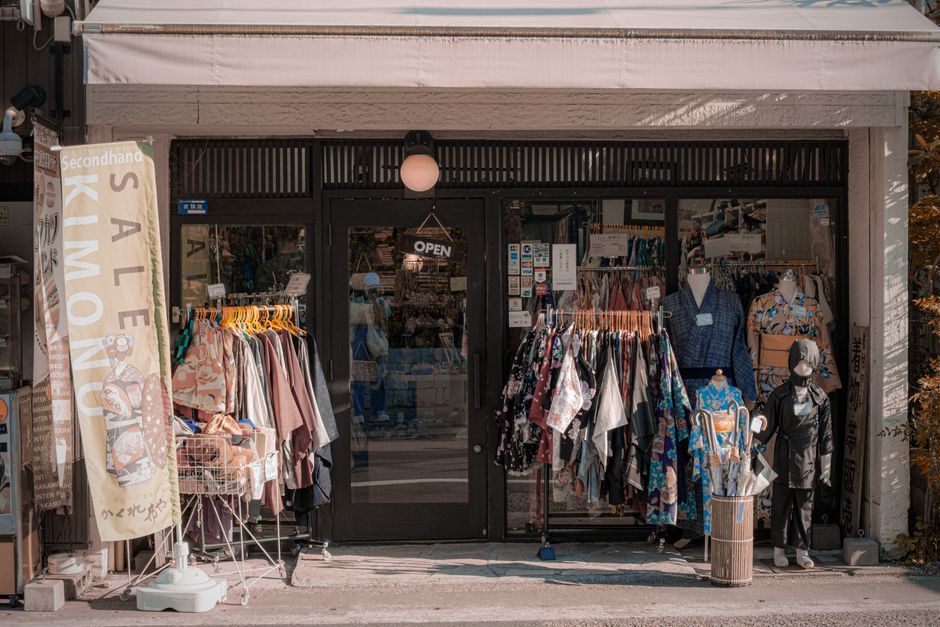
Start with durable basics, not delicate collector pieces. Beginners learn faster with garments that tolerate normal wear and simple alterations. Denim, cotton shirts, wool overshirts, and sturdy leather accessories show their value through fit and construction, so you can judge them without knowing every detail of fashion history.
Best entry-level categories
- Levi’s 501 jeans: A fair thrift price is often $15–$60. Check the waist, inseam, crotch, and hem before caring about the production year. They are the best first vintage buy for someone who wants an easy everyday foundation.
- Pendleton wool shirt: Expect roughly $20–$70 in thrift and resale settings. Look for a dense weave and intact elbow areas. Choose this over a fragile knit if you want warmth with low repair risk.
- Barbour Bedale jacket: Used prices commonly sit around $40–$150, depending on condition and lining. Check the waterproof finish, cuffs, corduroy collar, and zipper. It is a strong choice for outerwear, but not for someone unwilling to pay for professional rewaxing.
- Dr. Martens 1460 boots: A worn pair may cost $30–$90. Inspect the welt, heel, inside lining, and sole separation. Buy them only if the leather bends comfortably; breaking in painful boots is not a style achievement.
- Coach Legacy leather bag: Typical secondhand prices range from $25–$100. Check the strap attachment, lining, zipper, and odor. It is the clearest beginner option when you want vintage character without relying on vintage sizing.
When to choose a modern alternative
Do not buy vintage denim if you need stretch, a precise current fit, or a return-friendly purchase. Do not buy an old leather shoe with hardened soles if you need dependable walking footwear tomorrow. A modern garment may cost more but offer consistent sizing, fresh materials, warranty coverage, and easier returns.
My verdict: choose Levi’s 501 jeans for the safest first experiment, Pendleton for a warm layer, and a modern replacement when repair costs or fit uncertainty outweigh the style benefit.
How Can You Avoid Bad Vintage Purchases After Checkout?
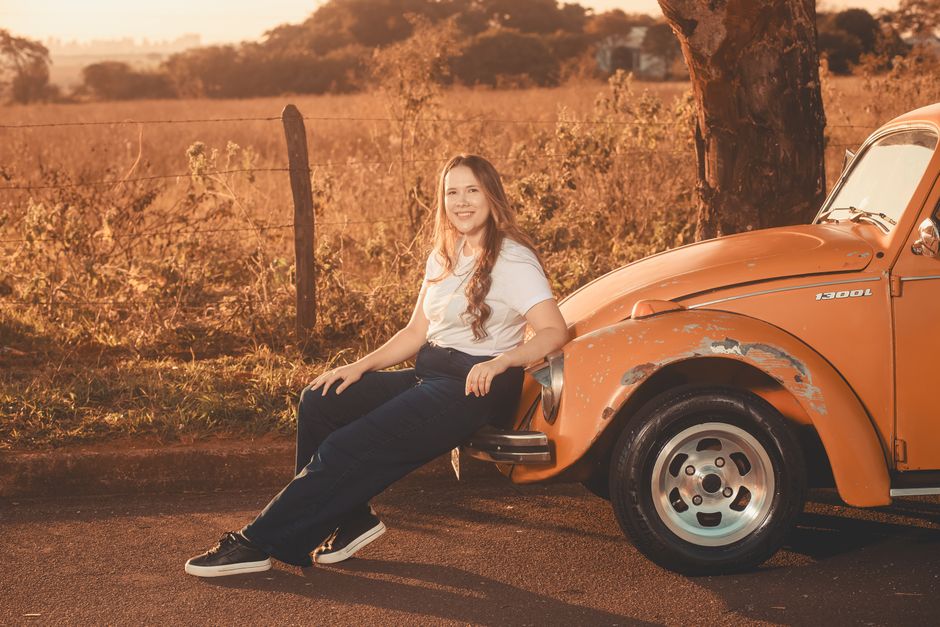
Can every thrifted item be cleaned at home?
No. Read the care label first. Cotton and many washable synthetics may handle a careful cold wash, but wool, silk, leather, suede, and lined tailoring can shrink, bleed, or lose shape. Keep questionable items in a separate bag until you decide on cleaning. A musty odor, visible pest damage, or unknown stain deserves professional advice rather than an aggressive home treatment.
What mistakes cause the most regret?
The most common mistake is buying an item because it looks rare on the hanger. A second is ignoring hidden costs: tailoring, resoling, dry cleaning, or a replacement lining. A third is assuming a familiar brand guarantees authenticity or quality. Inspect the item, record the price, and ask whether you would buy it at that price without the label.
Also avoid buying a garment that only works with one outfit. Three useful combinations are a better test: can the jacket work with jeans, trousers, and a plain shirt? If not, it may become an expensive costume piece.
My final recommendation is specific: begin with one clean, durable garment under $60, measure it before purchase, and wear it at least three times in the first month. For most beginners, a well-fitting pair of Levi’s 501 jeans or a sound Pendleton wool shirt offers the best balance of vintage character, manageable risk, and everyday use.
]]>I switched to buying only secondhand clothes three years ago. Not because I’m a saint about sustainability, though that’s a nice side effect. I did it because I was sick of spending $80 on a Zara blazer that fell apart after six dry cleans. The switch saved me money, but it also broke my impulse-buying habit completely. You can’t impulse-buy something that doesn’t exist in five sizes.
This isn’t a guide about how thrifting is magical and you’ll find Chanel for $12. It’s about the actual systems that make a secondhand-only wardrobe functional for a normal person with a job and limited patience.
The Three-Question Filter That Replaced My Shopping Impulse
When you can’t just grab something off a rack in your size, you need a different decision framework. I developed three questions that I ask before even clicking “save” on a listing. If a piece fails any of them, I close the tab.
Question 1: Can I wear this with at least three things I already own?
This kills about 60% of my potential purchases. A printed silk shirt from Equipment looks gorgeous on the Vestiaire Collective model, but if it only works with one pair of trousers in my closet, it’s dead weight. Secondhand pieces are harder to return—often impossible—so the compatibility bar has to be higher than retail shopping. I now mentally dress the item with my existing wardrobe before buying. If I can’t picture three complete outfits in 30 seconds, I pass.
Question 2: Would I pay full retail price for this if it were new?
This sounds counterintuitive. The whole point is saving money, right? But the psychology of thrifting tricks you into buying things just because they’re a “good deal.” A $40 cashmere sweater from The RealReal isn’t a good deal if you wouldn’t have bought it at $200 new. The discount isn’t the point. The garment is. This question filters out the dopamine hits that turn into closet orphans.
Question 3: Can I identify the fabric composition from the listing?
If the seller doesn’t show a photo of the care tag or list the fiber content, I don’t buy. Period. I’ve ended up with too many “silk” blouses that were actually 100% polyester because I gave sellers the benefit of the doubt. On Poshmark and Depop, I message sellers directly if the tag isn’t shown. No response within 48 hours, no purchase. This one rule eliminated 90% of my secondhand shopping disappointments.
Sizing Is the Real Villain—Here’s What Actually Works
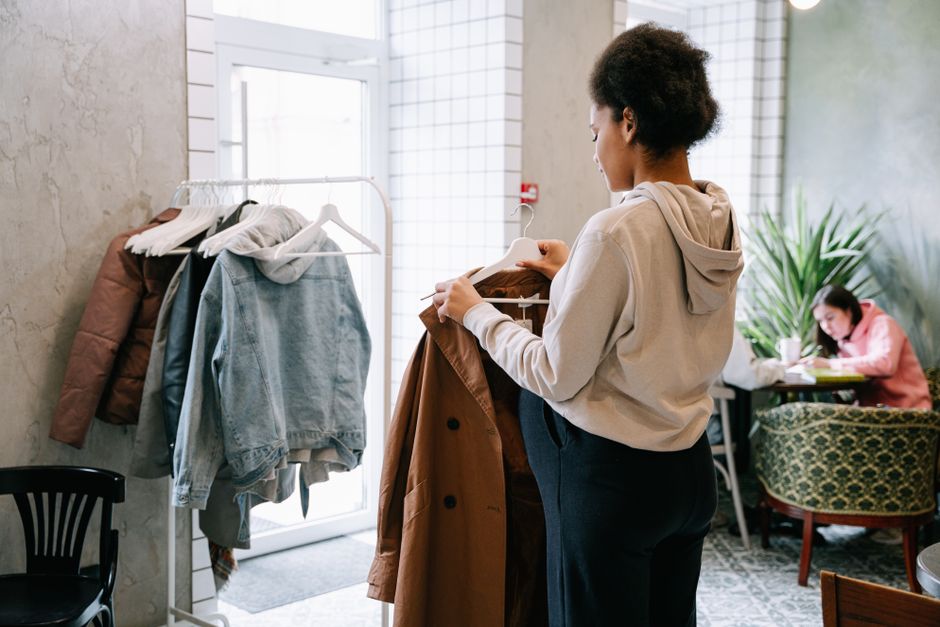
Size tags are almost useless in secondhand shopping. A size 8 from a 2015 J.Crew blazer fits nothing like a size 8 from a 2026 Cos dress. Plus, previous owners might have altered things. I learned this the hard way with a blazer that had been taken in at the waist without disclosure.
The only reliable approach is knowing your measurements cold and ignoring the tag completely.
What you need to measure:
- Shoulder width (seam to seam across the back)
- Pit-to-pit chest measurement on a flat garment
- Waist across, doubled
- Inseam for trousers
- Sleeve length from shoulder seam
When a seller provides these—and the good ones on eBay and Grailed do—you can compare against a garment you already own that fits well. This is more accurate than any size chart. I keep a note on my phone with the measurements of my best-fitting blazer, my best trousers, and my best button-down. When I browse, I cross-reference. It takes 30 seconds.
Brands with consistent sizing over time
Some brands hold their sizing steady across years better than others. Patagonia, for example, has remarkably consistent measurements across seasons. Same with Uniqlo, especially their men’s outerwear. On the women’s side, Eileen Fisher’s sizing hasn’t drifted much in a decade. I’ll buy these brands secondhand with less measurement-checking anxiety. Fast-fashion brands like H&M and Zara vary wildly—sometimes within the same season.
When to walk away from a listing
If a seller posts only one photo, uses a stock image instead of the actual item, or writes “fits like a medium” without measurements, I close the tab. These are signs the seller doesn’t know the garment well or doesn’t care. On platforms like ThredUp, where you can’t message sellers, I stick to brands I already know fit me.
Fabric Content Matters More Than Brand Name
Here’s something that took me two years to fully internalize: a no-name brand in 100% merino wool will outperform a designer label in a poly-blend every single time. The material is the product. The label is just marketing.
When you’re shopping secondhand, you can access fabric qualities that would cost $300+ new for under $60. But you have to know what you’re looking at.
| Fabric | What to Look For | Red Flags | Best Secondhand Sources |
|---|---|---|---|
| Cashmere | 2-ply minimum, Scotland or Italy origin | Pilling in listing photos, “cashmere blend” under 50% | The RealReal, eBay (vintage) |
| Cotton (shirting) | Long-staple (Pima, Supima, Egyptian), poplin or twill weave | Thin enough to see through, “easy care” on label | Poshmark (men’s), ThredUp (women’s) |
| Wool (tailoring) | Super 100s-120s, half or full canvas construction | Fused interlining, “wool blend” without percentage | eBay (vintage Brooks Brothers, Zegna) |
| Leather | Full-grain or top-grain, visible grain pattern | “Genuine leather” (lowest grade), cracking in photos | Vestiaire Collective, Grailed |
| Silk | 100% mulberry silk, charmeuse or crepe de chine | No fabric tag shown, “silky” in description | The RealReal, Depop (vintage) |
The “red flags” column is the one I wish I’d had three years ago. Sellers use words like “silky” and “cashmere-soft” to describe polyester. It’s not illegal, but it’s misleading. If the word isn’t followed by a percentage on a tag photo, assume it’s synthetic.
Where I Actually Find the Good Stuff
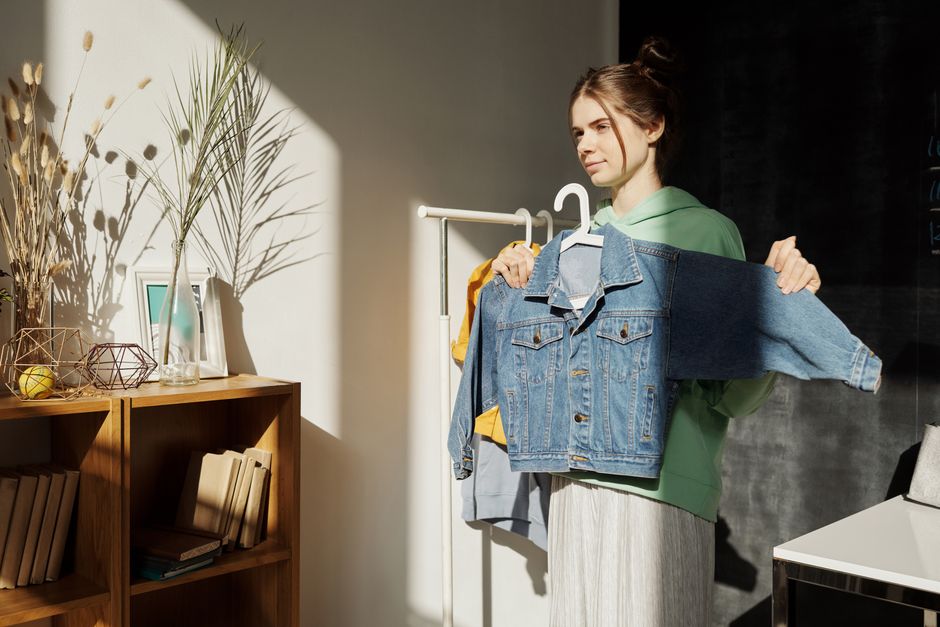
Not all secondhand platforms are equal, and they serve completely different purposes. I use five platforms regularly, and each one solves a specific problem.
The RealReal is where I buy investment pieces—blazers, leather bags, wool coats. Their authentication is decent, and their photos are consistent. Prices are higher, but returns are possible on most items. I’ve bought three blazers here, kept two, returned one. The return process wasn’t painless, but it worked.
eBay is the sleeper hit. Specifically for men’s tailoring and vintage wool. Search for “Brooks Brothers 1818 blazer 40R” or “Zegna wool trousers 34” and you’ll find pieces that cost $800+ new for under $100. The key is filtering by sellers who accept returns and have 98%+ positive feedback with at least 200 transactions. I ignore anyone below that threshold.
Poshmark works for contemporary brands like Everlane, Reformation, and Aritzia. The social features annoy me, but the seller responsiveness is better than eBay. I use it mostly for women’s pieces and shoes.
Vestiaire Collective is my go-to for European brands—Acne Studios, COS, APC. Their authentication adds a layer of trust, but their fees are steep. I only buy here when the item is otherwise hard to find.
Depop is chaos, but it’s where vintage lives. I’ve found 1990s wool trousers and 1970s leather jackets here that don’t exist anywhere else. You have to dig, and sizing is a gamble, but the prices reflect the risk.
The One Mistake That Wasted Hundreds of Dollars
Buying things that needed alterations I never got around to doing. A $30 blazer that needs $60 of tailoring isn’t a $30 blazer. It’s a $90 project that sits in your closet for eight months.
Now I factor tailoring costs into the purchase price before buying. Hemming trousers costs about $20-30. Taking in a blazer at the waist runs $40-60. Shortening sleeves from the shoulder—the only proper way to do it—can cost $80+. If the total cost (item + alteration) exceeds what I’d pay for a new equivalent, I don’t buy. This rule killed my habit of buying “almost perfect” pieces.
Also: some things can’t be altered well. Shoulders on a blazer are nearly impossible to fix. If the shoulders don’t fit off the rack—or off the listing—walk away. Same with jacket length. You can shorten a jacket maybe an inch before the pockets look wrong. Beyond that, you’re ruining the proportions.
I keep a tailor fund now. Every month, I set aside $30 specifically for alterations. When it builds up, I take in the pieces that need work. It’s boring, but it’s the difference between a wardrobe that fits and one that just hangs there.
]]>