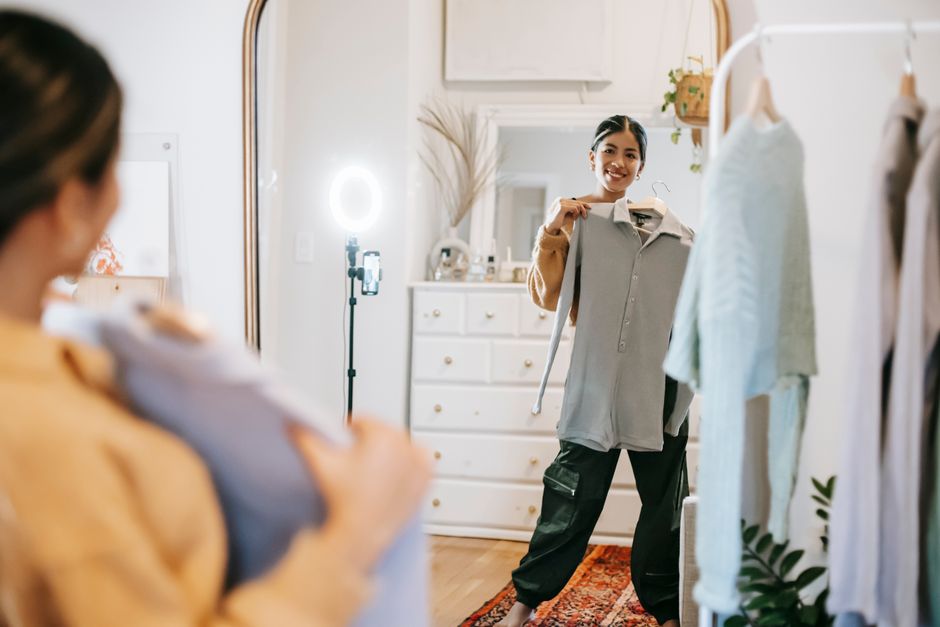
My 10-Item Work-From-Home Wardrobe Taught Me Fit Matters More Than Fabric
What do you actually need to wear when your office is twelve steps from your bed? I spent three months testing a strict ten-item wardrobe while working remotely. The assumption going in was that fabric would be the deciding factor—cashmere this, merino that. It wasn’t. Fit dictated everything. A $22 cotton t-shirt with the right shoulder slope looked sharper on camera than a $150 merino sweater that drooped at the armhole. Here’s the full list, what I learned, and where I’d tell someone to spend versus save.
The Core Problem No One Names: Your Clothes Are Fighting Your Desk Chair
Most work-from-home style advice skips over the physical reality of sitting for eight hours. You’re not standing at a networking event. You’re slumped, leaning, crossing legs, perching one foot under the opposite thigh. Clothes that look fine standing up can turn into a wrinkled, twisting mess by 11 a.m.
The failure mode I see constantly: people buy “comfortable work clothes” that are just pajamas with a collar. A brushed knit polo from L.L.Bean might feel soft, but if the side seams torque forward when you sit, you’ll spend every video call adjusting it. The fix isn’t more stretch. It’s a cut that accounts for a seated body.
Three things matter more than fabric content:
- Armhole height. A high, fitted armhole (not tight—fitted) prevents that wing of excess fabric that pools at your armpit when your arms are forward on a keyboard. The Uniqlo U Crew Neck Short-Sleeve T-Shirt ($19.90) gets this right. The armhole sits high and clean, no bunching.
- Center-back length. Too short, and your lower back gets exposed when you lean forward. Too long, and the fabric stacks at your waistband. The Everlane Organic Cotton Box-Cut Tee ($35) has a 25.5-inch back length on a size medium, which hits exactly at the hip crease for most people 5’6″ to 5’10”.
- Rise on pants. Low-rise anything becomes a torture device by hour three of sitting. A mid-rise (9.5 to 10.5 inches front rise) sits above the hip bone without digging into a stomach that’s compressing in a seated position. The Athleta Brooklyn Ankle Pant ($89) has a 10-inch front rise and a hidden elastic waistband that doesn’t roll.
What I’d Tell Someone Starting From Scratch
Buy one top with a structured shoulder first. Before you touch pants. Before you think about fabric. Find a top where the shoulder seam hits exactly at the edge of your shoulder bone, not sliding down your arm. That single detail does more for on-camera presence than any color or neckline. The COS Clean-Cut T-Shirt ($45) has a set-in sleeve with a seam that lands precisely at the acromion—the bony point at the shoulder edge—on most builds. Try it on. If the seam drifts even half an inch down your arm, size down or try a different brand.
The Ten Items, With Exact Reasons

| Item | Specific Product | Why It Made the Cut | Price |
|---|---|---|---|
| 1. Structured white tee | Uniqlo U Crew Neck Short-Sleeve T-Shirt | High armhole, thick 210gsm cotton that doesn’t show bra straps or chest hair on camera, flat-fell shoulder seams | $19.90 |
| 2. Black long-sleeve layer | Everlane The Luxe Cotton Long-Sleeve Tee | Micro-rib cotton with 5% elastane, hugs without clinging, sleeve length hits exactly at wrist bone | $40 |
| 3. Button-front overshirt | Alex Mill Standard Shirt Jacket in Cotton Twill | Unlined, machine-washable, dropped shoulders for layering over tees without restricting arm movement | $185 |
| 4. V-neck knit | Naadam The Essential $75 Cashmere Sweater | V-depth hits two inches below collarbone—deep enough to lengthen neck on camera, shallow enough to skip an undershirt | $75 |
| 5. Wide-leg pull-on pant | Athleta Brooklyn Ankle Pant | 10-inch front rise, hidden elastic waist, fabric is recycled polyester with a matte finish that reads as woven on Zoom | $89 |
| 6. Straight-leg jean | Levi’s 501 Original Fit (non-stretch) | 100% cotton, 11.25-inch front rise, sits at natural waist—the stiff denim actually prevents fabric bunching when seated | $79 |
| 7. Knit blazer | J.Crew Going-Out Blazer in Double-Serge Cotton | Unstructured, no shoulder pads, the cotton-serage has enough weight to drape cleanly but zero stiffness | $168 |
| 8. House dress | Mate The Label Organic Terry Sweatshirt Dress | Terry cloth, knee-length, side slits—looks intentional on camera, feels like a bathrobe | $98 |
| 9. Slide sandal | Birkenstock Arizona EVA | Waterproof, zero break-in period, the raised toe bar is actually useful for foot fidgeting during long calls | $45 |
| 10. No-show sock | Bombas Cushioned No-Show Socks (3-pack) | Silicone heel grip that actually holds, cushioned footbed for standing-desk hours, blister tab on Achilles | $38 |
Total cost: $836.90. That’s roughly the price of two designer blazers. And this covers every combination I needed for three months of remote work, including client calls, internal meetings, and one surprise in-person lunch.
On-Camera Presence Has Nothing to Do With Dressing Up
This was the most surprising finding. The outfits that got unprompted compliments on Zoom were not the ones with the cashmere sweater or the blazer. They were the ones with the highest contrast between my face and my clothing.
A white Uniqlo tee against a dark background made my face the focal point. The black Everlane long-sleeve against a light wall did the same thing. The Alex Mill overshirt in a faded olive green—a color I love in person—made me blend into my neutral apartment walls and got zero comments.
The principle: your laptop camera has terrible dynamic range. It exposes for the brightest thing in the frame. If your shirt is brighter than your face, the camera stops down and your face goes dark. If your shirt is significantly darker than your face, the camera opens up and blows out your skin tones. The sweet spot is a mid-tone top—not white, not black—in a color that’s two to three shades darker than your skin. For my light-medium skin tone, the Naadam cashmere in heather grey worked perfectly.
Skip the patterned tops entirely. The compression on Zoom, Google Meet, and Teams turns even subtle stripes into a moiré pattern that vibrates on screen. Solid colors only. Always.
When to Ignore This Entire List
If you work in a creative field where personal style signals competence—fashion, design, advertising—a minimalist ten-item wardrobe might read as a lack of imagination. In those contexts, one deliberately weird piece (a vintage silk scarf, a single oversized earring, a Comme des Garçons PLAY striped tee) signals taste more effectively than any “flattering” neutral. The rules invert. But for everyone else, the list stands.
Laundry Logistics Decide Whether This Works
A ten-item wardrobe fails immediately if everything needs dry cleaning or hand-washing. I learned this the hard way when the J.Crew blazer sat in a laundry bag for two weeks because I couldn’t muster the energy to drop it off.
Every item on the final list is machine-washable. The cashmere sweater (Naadam) gets washed on cold in a mesh bag and laid flat to dry. The Levi’s 501s get washed inside-out on cold and hung dry. The Athleta pants go in with regular laundry and come out ready to wear. The only item that needs any special handling is the blazer, and even that can go in a front-loading washer on delicate if you skip the spin cycle.
The math: with ten items, I did laundry once every five days. Two tees, one long-sleeve, one sweater, two pants, one dress, one overshirt, plus socks and underwear. That’s a manageable load. If you scale down to five items, you’re doing laundry every other day. If you scale up to twenty, you’re overwhelmed by choices every morning. Ten is the equilibrium point.
The Most Common Mistake: Buying “Workleisure” Brands at Full Price
There’s an entire category of direct-to-consumer brands that market specifically to remote workers—M.M.LaFleur’s “WFH” collection, Ministry of Supply, Betabrand. Most of it is overpriced polyester with good SEO.
The M.M.LaFleur Foster Pant ($195) is a 92% polyester, 8% spandex pull-on pant marketed as “boardroom to bedroom.” It’s fine. It’s also indistinguishable on camera from the Athleta Brooklyn Ankle Pant at less than half the price. The Ministry of Supply Apollo Raglan Sleeve Dress ($148) is a polyester-spandex blend with “NASA-developed phase-change materials” that supposedly regulate temperature. I tested it. It feels like a slightly heavier Uniqlo Airism dress. The temperature regulation claim is unverifiable in a climate-controlled apartment.
Here’s where the value actually lives: buy basics from mass-market brands that have spent decades perfecting fit (Uniqlo, Levi’s, Everlane), and save your money for one piece that makes you feel like a person who exists outside your apartment. For me, that was the Alex Mill overshirt. For someone else, it might be a pair of G.H. Bass Weejuns loafers or a vintage Rolex. One item that anchors your identity beyond “remote worker” is worth more than five “WFH-optimized” pieces.
What Happens When You Actually Wear This for a Month
Week one felt restrictive. I missed my striped button-downs and my olive chinos and my dumb graphic tees. By week three, I stopped thinking about clothes entirely before noon. The decision was made. The combinations were limited and known. The mental bandwidth that had been going to “does this look okay on camera?” got redirected to actual work.
There’s a term in cognitive psychology called decision fatigue—the deterioration of decision quality after a long session of decision-making. Every morning outfit choice depletes the same resource you need for spreadsheet analysis or writing or client negotiation. A ten-item wardrobe eliminates that drain. Not reduces it. Eliminates it.
The one thing I’d change: I’d swap the Levi’s 501s for a pair of Eileen Fisher Organic Cotton Wide-Leg Pants ($178) for days when I want to sit cross-legged in my chair. The 501s are great for standing and walking. They’re fine for sitting with both feet on the floor. They’re not fine for pretzel-sitting, and I pretzel-sit more than I realized.
Start With Three Items, Not Ten
If you’re reading this and feeling overwhelmed, don’t buy ten things. Buy three.
- One structured white tee that fits your shoulders. Uniqlo U Crew Neck ($19.90).
- One pair of pull-on pants with a 10-inch front rise. Athleta Brooklyn Ankle Pant ($89).
- One dark solid-color layer for video calls. Naadam Cashmere Sweater in charcoal or navy ($75).
That’s $184. Wear those three items in rotation for two weeks. Pay attention to what bothers you—is it the neckline? The sleeve length? The way the pants sit at your waist? Use that information to buy items four through ten. Do not guess. Do not buy someone else’s list wholesale, including mine. The right ten items for you will differ based on your body, your chair, your apartment’s lighting, and your tolerance for waistbands.
The lesson of this whole experiment wasn’t about minimalism or capsule wardrobes or looking professional on Zoom. It was that fit is the only variable that consistently matters, and most people have never worn a shirt that actually fits their shoulders. Start there.