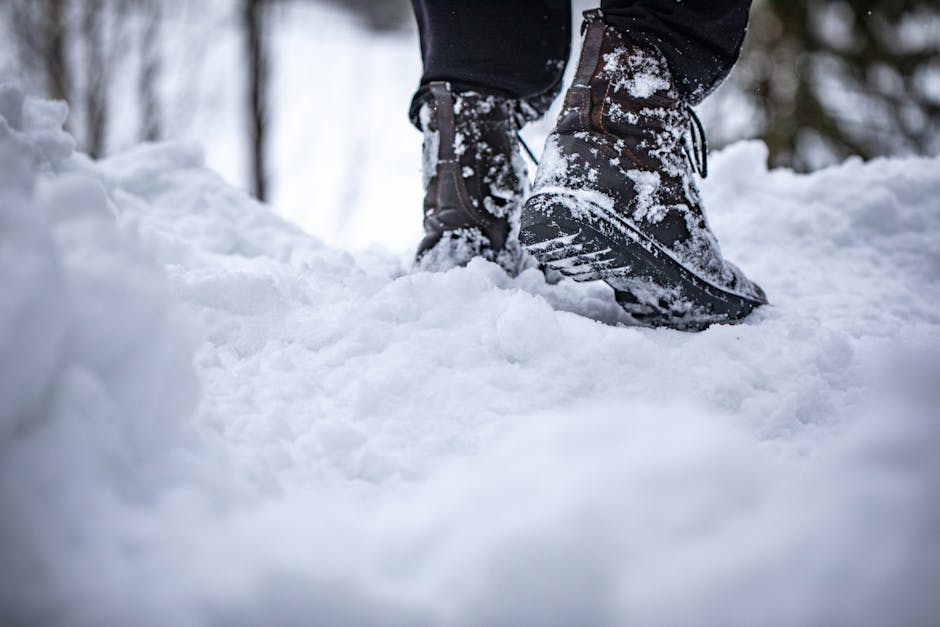
Why I stopped buying $300 boots and stuck with these ugly Navatex ones
I spent $280 on a pair of fancy leather boots three years ago because I wanted to look like a rugged woodsman while walking to the bus stop. Then I hit a patch of black ice outside a Tim Hortons in February, and my feet went so high in the air I actually saw my own reflection in the window before my tailbone hit the concrete. That was the end of my fashion-first era. I realized that looking like a heritage-brand model doesn’t mean much when you’re lying on your back in a slushy puddle, wondering if you’ve permanently misaligned your spine.
That’s how I ended up with Navatex. If you haven’t seen them, they aren’t exactly ‘cool.’ They look like something a practical middle-school principal or a guy who spends his weekends at Home Depot would wear. But after four winters of actually testing these things in the absolute worst conditions Montreal and Ottawa could throw at me, I have some thoughts. Strong ones.
The day I almost cracked my skull open
Before the Navatex, I was loyal to the big names. I’ve owned Sorels, I’ve owned Timbs, and I’ve owned those expensive leather boots from Red Wing that people swear by. The problem is that most ‘winter’ boots are actually just autumn boots with a bit of fluff inside. They don’t handle ice. They handle cold, sure, but ice is the real enemy.
I bought my first pair of Navatex boots at a local warehouse sale for about $110. I didn’t even want them. My wife basically forced me because she was tired of me complaining about my feet being wet and my dignity being bruised. The specific model I have uses the OC System—those little red plastic flippy things on the bottom. When I first saw them, I thought they looked like a cheap gimmick that would snap off the first time I stepped on a pebble.
I was wrong. I was completely wrong about the durability. I’ve put roughly 450 kilometers on these boots over the last two years, and the cleats are still there. They’ve saved me from at least a dozen potential ER visits. There’s a specific kind of confidence you get when you see a sheet of black ice and you don’t have to do that weird, tiny-step penguin shuffle. You just walk.
Let’s talk about those weird red flippy things

The core of any Navatex winter boots review has to be the ‘flip-grip’ or OC System. It’s a series of plastic hinges embedded in the sole with stainless steel studs. You use a little plastic key (which you will lose immediately, but you can just use your thumb or a coin) to flip them over. One side is a normal rubber tread; the other side has the spikes.
It’s like having cat’s claws on a frozen pond.
But here is the catch that nobody tells you: they are incredibly annoying if you go inside. If you walk into a grocery store or a mall and forget to flip them back, you sound like a tap dancer on a marble floor. It’s embarrassing. Everyone looks at you. Plus, you’re actually more likely to slip on smooth tile when the spikes are out than if you just had regular rubber. It’s a trade-off. You have to be okay with being ‘that person’ who stops in the entryway of the pharmacy to fiddle with the bottom of their shoes for thirty seconds.
The cleats are a total lifesaver on the sidewalk, but a total liability in the produce aisle. Flip them or regret it.
I might be wrong about this, but I feel like the plastic they use for the hinges has improved lately. My first pair felt stiff, but the newer ones seem to handle the salt and grit better. Speaking of salt—this is a brief tangent, but why does the city use so much of it? It destroys everything. My car, my porch, and definitely my boots. Anyway, the Navatex synthetic uppers actually hold up to salt better than real leather. You just wipe them down and the white crust comes right off.
I used to be a Sorel snob (and I was wrong)
I know people will disagree with me here, and I know the Sorel Caribou is a classic, but I honestly think they’ve gone downhill. They’re heavy, they’re clunky, and the rubber often cracks at the flex point after just one season. I’ve seen it happen to three different people in my office. Navatex doesn’t have that ‘prestige,’ but the build quality feels more honest. It’s not trying to be a fashion statement. It’s trying to keep you upright.
What I mean is—actually, let me put it differently. Navatex boots are for people who have reached an age where a broken hip is a legitimate concern, regardless of how old you actually are. I’m in my 30s and I’ve fully embraced the ‘ugly but functional’ lifestyle. I refuse to recommend Blundstones for winter even though everyone loves them, because they have zero ankle support and the traction is laughable on anything slicker than a wet sidewalk. They’re for people who want to look like they work but actually just answer emails in a heated office. There, I said it.
The numbers don’t lie, even if the boots are ugly
I’m a bit of a nerd when it comes to tracking my gear. I actually weighed these. My Navatex boots (size 11) weigh 842 grams for the left and 845 for the right. Why the 3-gram difference? No idea. Probably manufacturing sloppiness, but who cares. Compared to a heavy leather boot, these are light. You don’t feel like you’re wearing lead weights by the end of a long walk.
- Temperature Rating: They claim -30°C. In my experience, that’s a bit of a stretch. At -22°C in Montreal last January, my toes were starting to feel the bite after about 40 minutes.
- Tread Depth: 14mm when the cleats are tucked in. That’s deep enough to handle slush without getting clogged.
- Waterproofing: I stood in a 3-inch deep slush puddle for two minutes (don’t ask why, I was bored waiting for the bus). Bone dry.
- Price: Usually between $90 and $140 CAD.
The insulation feels like shoving your feet into a warm loaf of bread. It’s that thick, slightly squishy synthetic fleece. It’s not elegant, but it works. One thing though: if your feet sweat, these boots will hold onto that moisture. They don’t breathe well at all. If you wear them in the office all day, you’re going to have a bad time when you take them off at home.
One thing I absolutely hate about them
I have to be honest: the laces are garbage. Every pair of Navatex boots I’ve seen comes with these round, slippery nylon laces that come undone every ten minutes unless you double-knot them with the strength of a thousand suns. I don’t understand why a company can master a complex mechanical cleat system but can’t figure out how to make a piece of string that stays tied.
I ended up replacing mine with some flat waxed laces from a pair of old work boots. Problem solved, but for $120, I shouldn’t have to do surgery on my shoes the first week I own them. It’s a small thing, but it’s the kind of annoyance that builds up when you’re trying to get out the door in the morning and your fingers are cold.
Also, the aesthetics. Let’s not pretend. They are bulky. They make your feet look like two rectangular blocks of charcoal. If you’re trying to wear these with slim-fit jeans, you’re going to look like a Kingdom Hearts character. I’ve just accepted that from December to March, I look like a dork. It’s a small price to pay for not ending up in a cast.
Worth the embarrassment.
I genuinely don’t know if I’ll ever go back to ‘normal’ winter boots. Every time I put on a pair without spikes now, I feel vulnerable, like I’m walking on a greased-up bowling alley. It’s a weird kind of psychological dependency. Once you know you won’t slip, you can’t go back to wondering if every step is a gamble.
Does anyone actually like the look of these, or are we all just pretending because we’re scared of falling? I don’t have the answer. All I know is that my tailbone is much happier these days.
Buy them if you value your joints more than your Instagram feed.