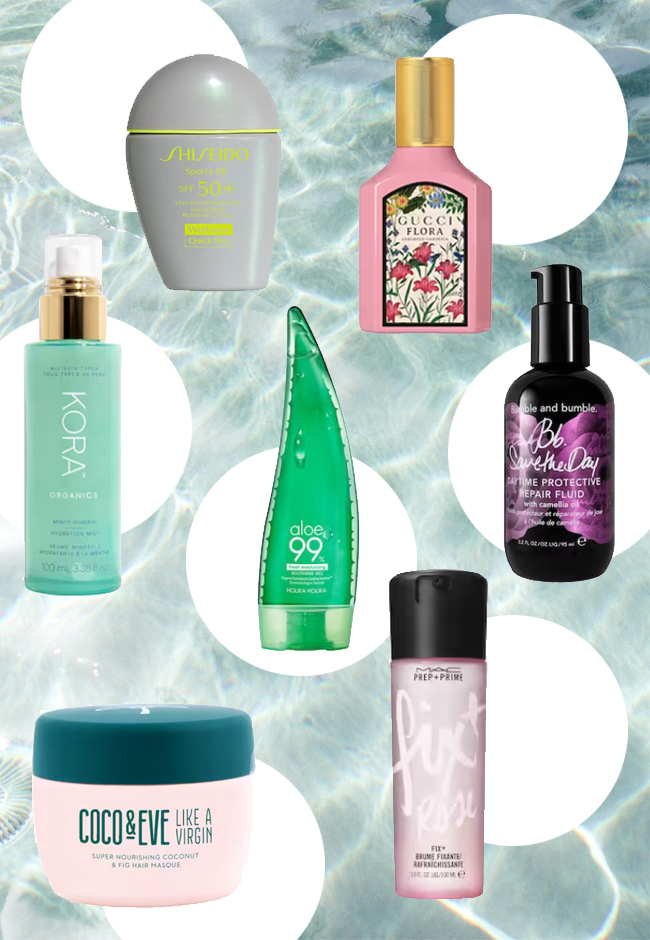
Beauty Summer Hacks
The common belief is that summer beauty just means wearing less — lighter makeup, thinner moisturizer, waterproof mascara and call it done. That’s mostly wrong, and it explains why so many routines collapse by noon in July. Real summer-proof beauty requires understanding why products fail in heat, not just swapping one item for another without knowing the mechanism behind it.
The Moisturizer Myth That’s Quietly Wrecking Your Summer Skin
Oily-skinned people skip moisturizer in summer. The logic seems reasonable: skin already produces more oil in heat, so adding moisturizer feels redundant. The reality runs in the opposite direction.
Skin stripped of external moisture overcompensates by producing more sebum. Skipping moisturizer doesn’t reduce shine — it creates more of it by mid-morning. The fix is switching formula, not dropping the step.
Why Your Winter Moisturizer Doesn’t Belong in Summer
Rich creams with shea butter, lanolin, or heavy ceramide blends don’t fully absorb when temperatures rise. They sit on the surface and create a film that traps sweat and dead cells. This is the actual cause of mid-afternoon breakouts in people who never deal with acne in colder months.
The swap: a water-based gel moisturizer. The Neutrogena Hydro Boost Water Gel ($19) is the most widely available option and performs as advertised — 48-hour hydration without clogging pores. For acne-prone skin, the CeraVe Moisturizing Cream in gel form ($16) adds niacinamide, which reduces sebum production while maintaining the skin barrier. Both absorb in under 30 seconds. Neither leaves a residue that fights with SPF or foundation.
One thing to expect: if you’re switching from a very rich cream, skin may feel temporarily drier for the first few days while it recalibrates. Oil production normalizes within a week once the skin adjusts to a lower external moisture input.
The SPF Application Order That Most People Get Wrong
The most common summer SPF mistake isn’t skipping sunscreen — it’s applying it incorrectly. SPF needs direct contact with skin to form an even protective layer. Applied over a thick moisturizer that hasn’t fully absorbed, it dilutes and distributes unevenly, leaving certain parts of your face with far less protection than the label states.
The EltaMD UV Clear SPF 46 ($39) is a chemical sunscreen best applied before moisturizer for oily and combination skin. For dry skin, La Roche-Posay Anthelios UVMune 400 SPF 50+ ($32) works better applied after a thin moisturizer layer. Which formula your skin needs determines the application order entirely — and completely changes how your makeup holds throughout the day.
The two-minute rule: after applying SPF, wait two full minutes before any makeup. Most people wait 30 seconds, then wonder why their foundation pills off by 10am. The film needs time to set.
Vitamin C + SPF: The Pairing That Increases Daily Protection
A vitamin C serum — specifically L-ascorbic acid — doesn’t replace sunscreen. It extends its protective effect. Applying vitamin C underneath SPF creates an antioxidant barrier that neutralizes free radicals from UV exposure that physical and chemical filters don’t fully address on their own. The SkinCeuticals C E Ferulic ($182) is the clinical benchmark, backed by peer-reviewed research. The Paula’s Choice C15 Super Booster ($49) performs comparably for most skin types at a third of the cost. Apply serum first on clean, dry skin, wait 60 seconds, then SPF, then makeup.
Which Makeup Products Actually Hold in 90°F Heat
Setting sprays are the most hyped and most misunderstood summer beauty product. Not all of them work the same way. Some seal makeup by reducing movement and transfer. Others add dewy hydration — which sounds appealing but actively causes makeup to slide in humidity. Here’s the real breakdown.
| Product | Price | Finish | Best For | Humid Weather Performance |
|---|---|---|---|---|
| Urban Decay All Nighter | $34 | Natural/matte | Outdoor events, oily skin | Excellent — holds 16+ hours in heat |
| Milani Make It Last Matte | $9 | Matte | Budget oil control, outdoor wear | Very good — rivals Urban Decay |
| MAC Fix+ | $30 | Natural/luminous | Mid-day refresh on dry, set makeup | Moderate — not a sweat shield |
| NYX Dewy Finish Setting Spray | $10 | Dewy | Dry skin in mild, low-humidity heat | Poor above 75% relative humidity |
| e.l.f. Halo Glow Setting Spray | $12 | Luminous | Indoor events, no-makeup looks | Fair — not for direct outdoor summer use |
Clear verdict: for outdoor summer conditions — a beach, a festival, an outdoor wedding — Urban Decay All Nighter is the only consistent performer in this list. The Milani Make It Last Matte at $9 is the best budget alternative. Worth trying first before committing to $34.
On foundation: heavy, full-coverage formulas break down in heat regardless of what primer or spray you use underneath. Switching to a lighter build is more effective than any fixing product. The NARS Sheer Glow Foundation ($50) provides medium coverage with a skin-like finish that holds better in humidity than full-coverage alternatives. In extreme heat above 90°F, a tinted SPF like the ILIA Super Serum Skin Tint SPF 40 ($48) outperforms traditional foundations entirely.
On primer: silicone-based primers don’t work well in summer. They create a barrier between skin and foundation that turns slippery as sweat builds. The Milk Makeup Hydro Grip Primer ($36) is water-based, grips pigment, and doesn’t pill under SPF. Once temperatures stay consistently above 75°F, it’s the right switch for most skin types.
Six Specific Hair Hacks for Humidity-Proof Results
Frizz happens because dry, porous hair absorbs moisture from humid air unevenly. The outer cuticle swells at different rates across each strand. Anti-frizz products work by either coating the cuticle to block moisture entry, or by filling porosity gaps to reduce absorption points. Understanding which approach you’re using tells you exactly when and how to apply it.
- Apply Olaplex No.7 Bonding Oil ($30) on damp hair, not dry. On damp hair it penetrates the cuticle before it dries into shape. On dry hair, it sits on the surface — you get shine but zero frizz control. The timing is the entire mechanism.
- Use a microfiber towel before any other product. Standard terrycloth creates friction that roughens the cuticle immediately after washing, before a single product touches your hair. The Aquis Original Hair Towel ($30) reduces baseline surface damage from step one. It produces better results than adding another product on top of a rough starting point.
- Apply Living Proof No Frizz Cream ($28) starting at the nape of the neck, not the crown. Most people apply product top-down. The underlayer — the hair closest to your neck, the part that frizzes hardest in humidity — gets the least coverage that way. Start underneath. The results shift immediately.
- Diffuse on low heat, not high. High heat opens and closes the cuticle rapidly during drying, which is exactly how surface frizz forms. Low heat with a diffuser lets each strand close slowly and evenly. It takes longer. The texture difference is noticeable.
- Skip daily dry shampoo above 85°F. Dry shampoo absorbs oil and sweat, but in sustained summer heat, daily use builds up on the scalp and can clog follicles. On very hot days, rinse with water and conditioner only — no shampoo — to refresh without stripping the scalp further.
- A bedroom dehumidifier solves morning frizz faster than any pillowcase switch. Silk pillowcases reduce overnight friction, which matters in winter. But summer morning frizz is mostly caused by bedroom humidity, not fabric. If your hair is consistently puffy by morning regardless of products, address the air first.
The One Product Swap Worth Making This Week
Replace your night cream with a lighter gel moisturizer and move vitamin C to your morning routine. Heavy night creams over-hydrate in summer warmth, contribute to congestion, and aren’t needed when ambient humidity is already elevated. The Paula’s Choice Resist Anti-Aging Clear Skin Hydrator ($38) works for most skin types without leaving you with clogged pores by morning.
When These Hacks Stop Working — Honest Answers
Every summer beauty tip has a failure condition. Here’s where these commonly break down.
Does setting spray actually hold makeup above 95°F?
Mostly no. At temperatures above 95°F, the alcohol in most setting sprays evaporates faster than it can form a protective film over your makeup. You’re left with almost no holding power once the mist settles. At that heat level, switching to a tinted SPF instead of a full foundation is more reliable. The ILIA Super Serum Skin Tint SPF 40 ($48) holds up far better in extreme conditions than any foundation-plus-spray combination. Full coverage simply doesn’t survive 95°F+ for more than a few hours regardless of what products you apply on top.
Does SPF in makeup replace a dedicated sunscreen?
No. To reach the SPF number printed on the label, you’d need to apply roughly 14 times the amount of foundation anyone actually uses. SPF testing applies 2mg of product per cm² of skin — far more than a typical makeup application. The SPF in foundation is a minor secondary benefit, not a substitute for a proper sunscreen layer underneath.
Why does SPF pill under makeup even when you wait two minutes?
Two causes. First, ingredient incompatibility: chemical sunscreens containing avobenzone don’t layer smoothly under silicone-based primers. The molecules don’t bond the same way, and the product rolls off when foundation goes on top. Second, too much total product. In summer, every layer should be lighter than feels necessary. A fingertip-sized amount of SPF is enough for the full face. More than that pills consistently, no matter what else you layer on.
The fix that actually works: switch to a mineral sunscreen with zinc oxide — the EltaMD UV Physical Broad-Spectrum SPF 41 ($39) — paired with a water-based primer. Zinc sits flat on skin and doesn’t interact chemically with other ingredients the way chemical UV filters do. For anyone who has been stuck in the pilling cycle and tried everything else, this is the combination that stops it.
Is rice water rinsing legitimate or just a trend?
It has a real mechanism. Fermented rice water contains inositol, a carbohydrate that fills surface gaps in damaged hair cuticles and reduces friction. The process: soak uncooked rice in water for 30 minutes, strain out the rice, let the water ferment at room temperature for 24 hours, dilute with clean water, then use as a 5-minute post-shampoo rinse before rinsing out. Results appear after 3 to 4 uses. Caveat: on fine or low-porosity hair, it can create stiffness. On coarse, thick, or high-porosity hair — the type that frizzes hardest in summer humidity — the results are consistent and worth the extra step over buying another cream or serum.
If you’re rebuilding a summer beauty routine from scratch, start with two products: EltaMD UV Clear SPF 46 ($39) on bare skin every morning, and Urban Decay All Nighter Setting Spray ($34) as your final makeup step. Together they solve the two most common summer failure points — UV protection that stays put and makeup that doesn’t slide — and cover the majority of what makes hot-weather beauty frustrating to maintain.