How to Choose Statement Earrings for Your Face Shape
Have you ever put on a dramatic pair of earrings, checked the mirror, and wondered why they looked better on the product page than on you? I have. The problem usually is not your face, your outfit, or even the earrings. It is the relationship between the earring’s outline and the shape, width, and length of your face. Once you read that relationship correctly, buying statement earrings becomes much easier.
The aim is not to follow a rigid beauty rule. Your face is not a perfect oval, circle, heart, or diamond. Most people sit between two shapes. Use face shape as a starting point, then check scale, weight, colour, and hairstyle before spending money.
What face shape do you actually have?
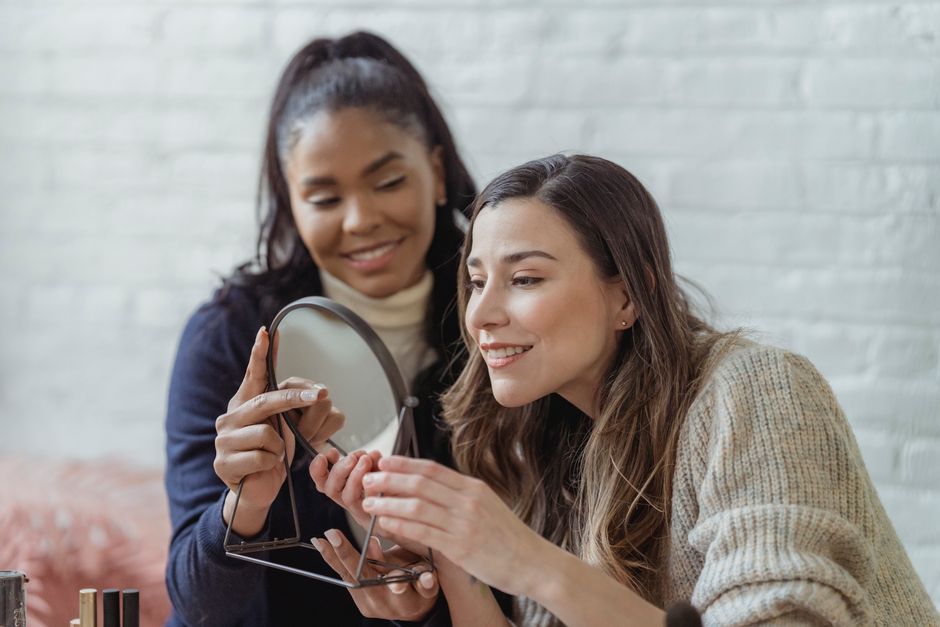
Face-shape advice goes wrong when people guess from a selfie taken with a wide-angle phone lens. That lens can make the centre of your face look wider and your jaw look narrower. Use a straight-on photograph taken from about 1.5 metres away, or stand in front of a mirror with your hair pulled back. You are looking for the widest area and the balance between forehead, cheekbones, jaw, and face length.
Measure the four useful points
Measure or estimate four things: forehead width, cheekbone width, jaw width, and total face length from hairline to chin. You do not need perfect numbers. A face that is much longer than it is wide often reads as oblong or oval. A face with similar length and width may read as round or square. A pointed chin with a wider forehead suggests a heart shape, while strong cheekbones with a narrow forehead and jaw suggest a diamond shape.
Read the outline, not the label
Look at the outside line of your face with your hair away from your cheeks. A round face has softer curves and little difference between length and width. A square face has a stronger jaw and similar proportions, but the corners look more defined. An oval face tends to be longer, with a gently curved jaw. Oblong faces have length as their main feature. Heart and diamond faces become narrower at the chin or forehead.
This matters because earrings add a second outline beside your face. Long, slim earrings add downward movement. Wide hoops add horizontal width. Angular earrings echo a strong jaw, while curved designs soften it. The best choice creates the balance you want, rather than blindly copying a chart.
Which statement earring shape suits each face?

Use this chart as a quick buying filter. The “best starting point” is the style I would try first, not the only style you can wear.
Quick matching chart
| Face shape | Best starting point | Use carefully | Useful size guide |
|---|---|---|---|
| Round | Long drops, slim teardrops, angular lines | Very wide round hoops | 35–60 mm long |
| Square | Curved drops, oval hoops, soft tassels | Sharp square studs | 30–55 mm wide or long |
| Oval | Most shapes, especially sculptural drops | Oversized styles that hide the jaw | 20–60 mm in the strongest direction |
| Oblong | Shorter wide drops, clustered earrings | Very narrow earrings over 60 mm long | 25–45 mm wide |
| Heart | Bottom-heavy drops, chandeliers, teardrops | Top-heavy triangular designs | 30–55 mm long |
| Diamond | Curved hoops, oval drops, balanced chandeliers | Very sharp cheekbone-level angles | 25–50 mm long |
Why proportion beats face-shape rules
A 20 mm earring can look bold on a petite face and almost invisible on a broad face. A 60 mm drop may look elegant with a sleek bun but overpower a face framed by thick curls. That is why the size guide uses ranges instead of one magic measurement. Your hairstyle, glasses, neck length, and collar shape all change the visual space around the earrings.
My safest rule is to match contrast. If your face has soft curves, an angular earring can add definition. If your jaw is sharp, a rounded earring can stop the look from feeling severe. If your face is already long, choose width before adding more length.
For a round face, choose vertical movement
Best direction
For a round face, long earrings with a narrow or gently pointed bottom are the best first purchase because they draw the eye down instead of adding another horizontal line across the cheeks, and styles between 35 and 60 mm usually create enough movement to change the balance without looking costume-like, especially when the metal or stone colour matches one detail in the outfit.
What to skip
Skip very wide circular hoops that sit exactly beside the fullest part of the cheek, thick button-shaped earrings that repeat the face’s widest point, and heavy designs that pull the lobe down, but do not treat every hoop as a problem: an oval hoop, a slim huggie with a long charm, or a teardrop that is taller than it is wide can work extremely well.
If you love big round hoops, wear them with a lifted hairstyle or a V-neck so the whole outfit adds height. The goal is not to make your face look thinner; it is to create a longer visual path from the ear to the shoulder.
How should you test statement earrings before buying?
Statement earrings are easier to judge when you test the full shape, not just the front photograph. I use this five-step check before buying anything over about $50. It catches most of the mistakes that make a dramatic pair sit unused in a jewellery box.
- Check the widest point. Hold the earring beside your cheek in a mirror. If its widest section lands exactly at your face’s widest point, decide if you want emphasis there. For a round or oblong face, I usually move the widest section higher or lower.
- Check the actual drop. Measure from the piercing to the lowest point, not just the advertised length. A 45 mm earring can become 55 mm once a hook or post is included. That extra centimetre changes the look.
- Check the weight. Try to stay below about 7 grams per earring for a long event and below 4 grams for all-day wear. The Mejuri Bold Huggie Hoops are a useful everyday reference: the 10k gold version is listed at $298 with a 12 mm outer diameter, so they add presence without creating a long, swinging line.
- Check the finish against your wardrobe. Gold works with warm browns, camel, cream, and olive. Silver and rhodium suit black, cool grey, blue, and crisp white. Mixed metal is the most flexible choice if your watch, rings, and belt hardware do not match.
- Check the earring with your hair up and down. A long drop can disappear under thick hair. A wide hoop can snag in curls. For a visible event pair, Swarovski’s New Lunar drop earrings, listed at £79 on the UK site, are a sensible example of a noticeable style that still has a clean oval direction.
My pick for a first statement pair is a medium drop with a curved base, a secure post, and a total weight under 6 grams. It works with more necklines and creates fewer comfort problems than a huge chandelier.
Face-shape earring questions people ask
Can an oval face wear any statement earring?
Almost, but scale still matters. Oval faces have balanced length and width, so they can handle hoops, drops, geometric pieces, and clustered designs. The trap is choosing an earring that is so large it covers the jaw and becomes the only thing people see. Start with a 30–50 mm design for daytime, then move larger for evening clothes. A sculptural oval or asymmetric drop usually looks more polished than a random oversized shape because it has a clear line.
What works for a square face?
Rounded edges create the easiest contrast. Try oval hoops, curved teardrops, pearl clusters, or tassels that move when you turn your head. A square face can also carry bold earrings very well, but a rigid square design beside a strong jaw can make the whole look feel boxed in. If you like geometric jewellery, choose circles joined to bars or softened rectangles rather than a solid square.
Which earrings balance a heart or diamond face?
Look for visual weight toward the bottom. A teardrop, chandelier, or earring that widens near the lowest point fills the space around a narrow chin. For a diamond face, curved designs help soften prominent cheekbones while keeping the forehead and jaw balanced. The Kendra Scott 0.42 ct Elisa 14k Yellow Gold Interlocking Drop Earrings are a luxury example at $2,000, but the useful lesson is the interlocking drop shape, not the diamond price. You can copy the proportion in plated metal or glass for far less.
Which buying mistakes make statement earrings look wrong?
My strongest opinion is to buy for the complete outfit, not for the earring alone. A dramatic pair can be beautiful on a white studio background and awkward with your usual hair, glasses, and coat. The failures are predictable, which makes them easy to avoid.
Mistake 1: Choosing maximum size
The largest pair in the shop is not automatically the most flattering. Oversized earrings can stretch piercings, catch on scarves, and compete with a high neckline. If the design weighs more than 8–10 grams per side, save it for short wear unless you already know your ears tolerate it. A smaller pair with a strong silhouette will look more intentional than a huge pair that keeps tilting.
Mistake 2: Ignoring the fastening
French hooks are quick but can slide forward. Push backs are fine for light pieces, while hinged hoops and lever backs give heavier drops more control. Check that the post sits near the visual centre of the design. If it sits too high, the earring may tip forward and show its side instead of its face. That is a construction problem, not a face-shape problem.
Mistake 3: Matching every feature too literally
People with round faces do not need to ban circles, and people with square faces do not need to avoid every straight line. Repeating a feature can look deliberate when the scale is right. The mistake is repeating it at the same size and position. A round face with a slim oval hoop can look balanced; a round face with a thick 60 mm circle beside the cheek can look crowded.
Mistake 4: Buying for one photograph
Turn your head, smile, and raise your shoulders while testing the earrings. If the design hits your neck, hair, or glasses in normal movement, it will annoy you after twenty minutes. Also check the back of the earring. A polished front does not excuse a rough post or a clasp that pinches.
Do not buy statement earrings at all if you rarely wear jewellery, have recently irritated piercings, or need something for a long workday where noise and movement distract you. A small sculptural stud is the better purchase.
My statement earring picks by face shape and budget
Here are the styles I would choose if I were building a small, useful collection. Prices can move with metal, colour, and promotions, so treat them as reference points rather than permanent quotes.
Best practical choices
| Best for | Product example | Why I would choose it | Reference price |
|---|---|---|---|
| Round faces | Swarovski New Lunar drop earrings | Clean oval direction and enough length without a huge width | £79 |
| Everyday bold style | Mejuri Bold Huggie Hoops, 10k gold | 12 mm outer diameter, solid gold, comfortable short profile | $298 |
| Heart faces | Kendra Scott Elisa interlocking drop earrings | Bottom movement balances a narrower chin | $2,000 in 14k gold and diamond |
| Square faces | Missoma oval or molten hoop styles | Curved edges soften a strong jaw and work with simple outfits | Usually around £100–£150 |
| Evening glamour | Swarovski Idyllia drop earrings | Crystal detail adds impact without requiring a large metal shape | About $189 |
My clear verdict
For a first pair, I would buy the Swarovski New Lunar drop earrings for a round or oblong face, a curved Missoma hoop for a square face, and a bottom-heavy teardrop for a heart-shaped face. The Mejuri Bold Huggie Hoops are the best everyday choice when comfort matters more than length. I would only spend $2,000 on the Kendra Scott Elisa pair if the fine-jewellery materials matter to you; its shape can be copied for a fraction of the cost.
The single most useful test is simple: choose a design whose strongest line balances your face’s strongest line, then keep the weight light enough that you will actually wear it.