High-Quality Clothing Basics: The Clothing Seams Test That Predicts a Decade of Wear
Most people shop for clothes wrong. They rub the fabric between their fingers, check the price tag, and call it a day. That tells you almost nothing about whether a t-shirt will survive 50 washes or disintegrate by month six.
The single most reliable quality indicator sits right in front of you, ignored: the seams.
Pull a garment inside out. If the seam allowance—the fabric between the stitch line and the raw edge—is less than 3/8 of an inch, put it back. Narrow allowances fray. They unravel. They’re the first thing to blow out on a pair of trousers or a shoulder seam. Brands cutting costs start here, shaving millimeters to squeeze more units from the same bolt of fabric.
This article isn’t about brand prestige or price brackets. It’s about physical tells. The stuff you can measure, weigh, and stress-test in a fitting room.
The Fabric Weight Minimum That Actually Matters
Lightweight everything has dominated fast fashion for a decade. It photographs well. It drapes nicely on a hanger. It also develops holes if you look at it wrong.
Fabric weight is measured in GSM—grams per square meter. For a t-shirt to last years, not months, you want 180 GSM minimum. 200-220 GSM is the sweet spot for everyday cotton basics. Anything under 150 GSM is tissue-weight. It’ll feel soft on day one and develop a tear near the belt line by month three.
You can’t measure GSM in a store. But you can do the hand test. Hold a single layer of fabric up to the light. If you can clearly see your fingers through it, it’s too thin. If it feels substantial but not stiff, you’re in the right range.
This applies across categories. A merino wool sweater should feel dense, not airy. Linen shirts benefit from heavier weights—they soften beautifully over years instead of shredding at the elbows. Cheap linen is often 120-150 GSM. Good linen starts around 180 GSM and wears like armor once broken in.
Fabric Weight by Garment Type
| Garment | Minimum GSM | Ideal GSM | Too Light (Avoid) |
|---|---|---|---|
| T-shirt | 180 | 200-220 | Under 150 |
| Sweatshirt | 300 | 350-400 | Under 260 |
| Denim | 340 (12 oz) | 400-475 (14-16 oz) | Under 285 (10 oz) |
| Oxford shirt | 150 | 170-200 | Under 130 |
| Linen shirt | 150 | 180-220 | Under 120 |
Weight isn’t everything. A dense, tightly woven 180 GSM cotton can outlast a loosely spun 220 GSM. But it’s the fastest filter. If the fabric feels insubstantial, it is.
The Three Seam Types and Which One You Want
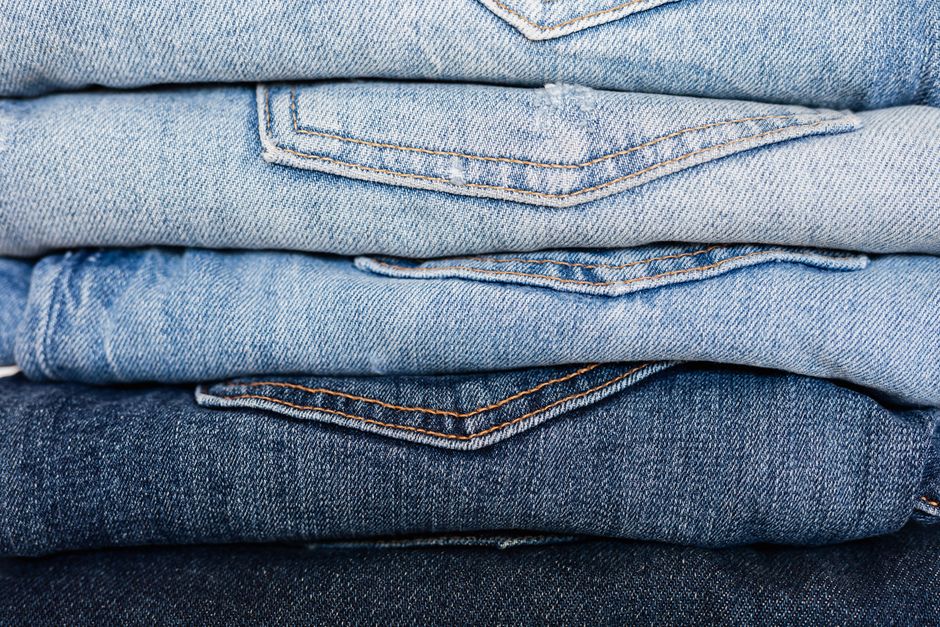
Not all seams are equal. Once you know the three main types, you’ll spot quality from across a room.
Overlock (serger) seams are the standard. You see them on the inside of most t-shirts—those loopy threads wrapping the raw edge. They’re fine. They’re functional. But on their own, they’re the minimum viable seam. Stretch a serged seam perpendicular to the stitching and you’ll see the threads separate. That’s your failure point.
Flat-felled seams are the gold standard. Look at the inside leg of quality denim. You’ll see two rows of stitching and no raw edge—the fabric folds over itself and gets stitched flat. These seams are nearly indestructible. They distribute tension across the entire folded fabric rather than concentrating it on a single stitch line. Brands like Everlane use flat-felled seams on their oxford shirts. It costs more in labor. It lasts years longer.
French seams enclose the raw edge inside a little fabric tunnel. Common on lightweight fabrics like silk and fine cotton. They’re elegant and prevent fraying on delicate materials. You’ll find them on higher-end blouses and dresses. Not as tough as flat-felled, but far better than raw serged edges.
The quick test: run your finger along the inside of a side seam. If you feel a ridge of folded fabric with no loose threads, you’re holding something well-made. If you feel just a single line of stitching with raw fabric edges, it’s built to a price point.
Natural Fibers That Improve With Age vs. Ones That Degrade
The fiber content tag tells you what happens five years from now. Some materials degrade. Others get better.
Cotton is the default. But cotton quality varies enormously. Pima and Supima cottons use longer staple fibers—over 35mm—which means fewer fiber ends poking out to pill and fray. Standard upland cotton runs 25-28mm. Those shorter fibers work loose, tangle, and form those little fuzz balls on your t-shirt. Uniqlo’s Supima cotton tees are a solid entry point at around $20. They hold up noticeably better than their standard cotton equivalents.
Merino wool gets softer with wear if it’s high-quality. Cheap merino pills aggressively because the fibers are shorter and the yarn is loosely twisted. Look for merino from brands that specify fiber micron count—anything under 19.5 microns feels soft against skin and resists pilling. Icebreaker and Wool&Prince both publish their micron specs.
Linen is the longevity champion. It’s 30% stronger than cotton when wet. It doesn’t pill. It softens over decades. The downside: it wrinkles if you breathe near it. A 200+ GSM linen shirt from a brand like J.Crew’s Baird McNutt collaboration will outlast you if you treat it right.
Polyester and synthetics don’t age—they degrade. Synthetic fibers break down under UV exposure and repeated washing, releasing microplastics and losing structural integrity. That athletic top that feels great new will be misshapen and shiny at stress points within two years. There is no high-quality polyester basic that lasts a decade. It doesn’t exist.
Five Construction Details You Can Check in 30 Seconds

You don’t need expertise. You need a checklist. Here are five things to check on any garment before buying.
- Pattern matching at seams. If the fabric has stripes or plaids, do they line up at the side seams? Matching patterns requires more fabric and more labor. Mismatched patterns scream cost-cutting. This is the first thing tailors notice.
- Button quality and attachment. Good buttons have some weight—they’re often corozo nut, mother-of-pearl, or thick resin. Cheap buttons are lightweight plastic with visible mold lines. Check if buttons on stress points (like jacket cuffs) have a small thread shank or backer button. If they don’t, they’ll pop off.
- Zipper brand. YKK zippers are the industry standard for a reason. They don’t fail. If a garment uses a no-name zipper, the brand cut costs on hardware. That zipper will snag, separate, or break within a few years. Replacing a zipper costs $30-50 at a tailor—often more than the garment itself.
- Hem depth. Flip up the bottom hem. Is there at least an inch of fabric folded under? Deep hems let you lengthen pants or sleeves. They also weigh down the garment so it hangs properly. Shallow hems curl, flip up, and can’t be altered.
- Reinforcement stitching. Check stress points: armpit seams, crotch seams, pocket corners. Look for bar tacks—those dense zigzag stitches that reinforce high-tension areas. No bar tacks on pocket corners? Those pockets will rip the first time you put something heavier than a receipt in them.
These five checks take 30 seconds. They tell you more than any brand name.
Why Price Doesn’t Guarantee Quality (and What Does)
There are $200 t-shirts that pill in three washes and $30 t-shirts that last five years. Price signals nothing reliable in 2026. Brands price based on marketing spend, scarcity positioning, and margin targets—not just material and labor costs.
The correlation between price and durability is weak. A 2026 study from the University of Leeds tested t-shirts across price points and found no consistent relationship between retail price and fabric durability. The $15 shirt sometimes outperformed the $80 one.
What actually predicts longevity:
- Fiber staple length (longer = less pilling)
- Yarn twist (tighter twist = more durable, less soft initially)
- Seam type (flat-felled > French > serged)
- Seam allowance (3/8 inch minimum)
- GSM (heavier generally lasts longer within the same fiber)
None of these appear on the price tag. You have to look at the garment itself. This is liberating once you internalize it. You can build a durable wardrobe from Uniqlo, Everlane, and COS without touching designer price points. You just need to know what to reject.
A $40 Everlane cotton crew neck with flat-felled shoulder seams and 200 GSM fabric will outlast a $120 designer tee with serged seams and 140 GSM fabric. Every time.
Care Habits That Kill Clothes Before Their Time

Even the best-constructed garment dies young if you treat it badly. Care mistakes destroy more clothes than manufacturing defects ever do.
The dryer is the number one killer. Lint is your clothing disintegrating. Every dryer cycle shears off fiber ends, thins fabric, and weakens seams. Heat degrades elastic, shrinks natural fibers, and sets stains permanently. If you want clothes to last a decade, air dry them. A folding drying rack costs $25 and pays for itself in six months of reduced clothing replacement.
Overwashing. Most clothes don’t need washing after every wear. Wool is naturally antimicrobial—air it out overnight and spot-clean stains. Denim can go weeks between washes. Every wash cycle stresses fibers and fades color. Less washing equals longer life.
Detergent overdose. More soap doesn’t mean cleaner clothes. It means residue buildup that traps odors, stiffens fabric, and attracts dirt. Use half the recommended amount. Your clothes will feel softer and last longer.
Washing on hot. Hot water sets protein stains (blood, sweat), shrinks natural fibers, and fades dyes faster. Cold water cleans most everyday dirt just as effectively with modern detergents. Reserve hot water for heavily soiled items and whites that need brightening.
The best-made shirt in the world won’t survive weekly hot washes and an hour in the dryer. Construction quality and care habits are equally important. You can’t buy your way out of bad laundry practices.